PuroAir Air Purifiers: 130i vs 240 vs 400 – Which One Should You Choose?
Indoor air quality is a big worry for many homes. Studies say indoor air can be 2-5 times dirtier than outside air. PuroAir is a well-known brand in air purification, offering several models for different needs.
This guide will compare the PuroAir 130i, 240, and 400 models. We’ll look at coverage area, filtration tech, noise levels, and more. By the end, you’ll know which PuroAir air purifier is best for your home.
PuroAir Air Purifiers Comparison: Quick Specs Overview
| Feature | PuroAir 130i | PuroAir 240 | PuroAir 400 |
| Coverage Area | Up to 600 sq. ft. | Up to 1,000 sq. ft. | Up to 2,000 sq. ft. |
| CADR Rating | 130 CFM | 240 CFM | 262 CFM (Dust) |
| Filtration Technology | 3-stage (Pre-filter, HEPA, Activated Carbon) | 3-stage (Pre-filter, HEPA, Activated Carbon) | 3-stage (Pre-filter, HEPA, Activated Carbon) |
| Noise Level | 24-52 dB | 24-54 dB | 27-60 dB |
| Dimensions | 8.7″ x 8.7″ x 14.2″ | 10.6″ x 10.6″ x 16.5″ | 8.1″ x 14.4″ x 21.5″ |
| Weight | 7.5 lbs | 10.8 lbs | 14.73 lbs |
| Special Features | Air Quality Sensor, Sleep Mode, Timer | Air Quality Sensor, Sleep Mode, Timer, Child Lock | Air Quality Sensor, Sleep Mode, Timer, Child Lock, Auto Mode |
| Filter Replacement | Every 3-6 months | Every 3-6 months | Every 3-6 months |
| Price | $129.99 | $179.99 | $259.00 |
PuroAir 130i: Compact Power for Small to Medium Rooms
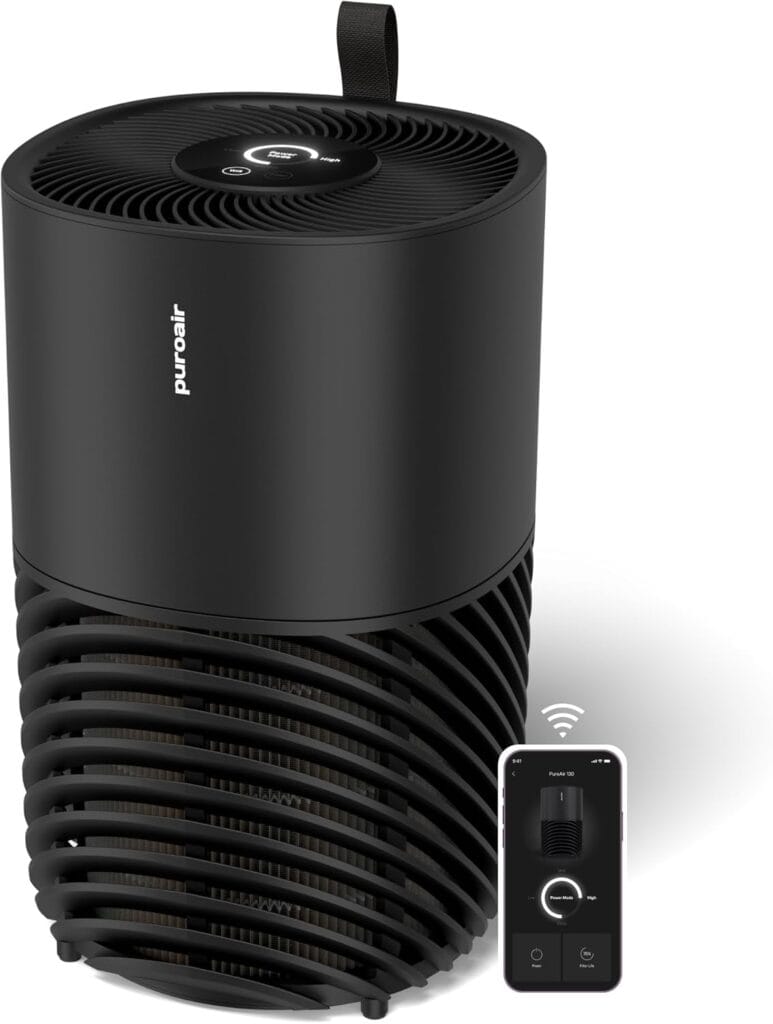
Key Specifications
- Coverage Area: Up to 600 sq. ft.
- CADR Rating: 130 CFM
- Filtration: 3-stage with HEPA filter capturing 99.9% of particles
- Noise Level: 24-52 dB
- Dimensions: 8.7″ x 8.7″ x 14.2″
- Weight: 7.5 lbs
- Power Consumption: 40W
Pros
- Compact and lightweight design
- Quiet operation (24dB on sleep mode)
- Effective for bedrooms and small offices
- Most affordable PuroAir option
- Energy efficient
Cons
- Limited coverage area compared to larger models
- Fewer advanced features
- Not ideal for large open spaces
- Smaller filter capacity may require more frequent changes in heavily polluted environments
Perfect for Bedrooms & Small Spaces
The PuroAir 130i offers excellent air purification for smaller rooms up to 600 sq. ft. Ideal for bedrooms, home offices, or nurseries where quiet operation is essential.
PuroAir 240: Balanced Performance for Medium to Large Rooms
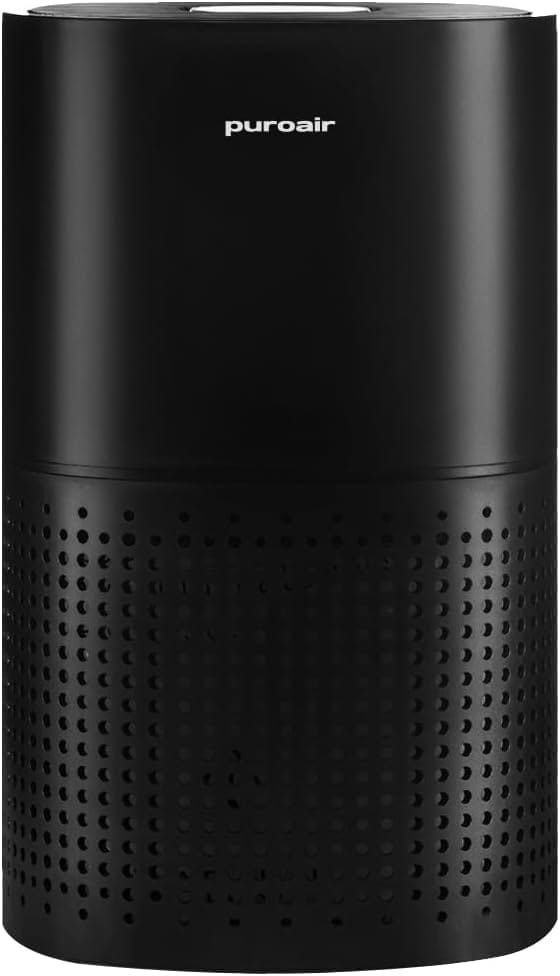
Key Specifications
- Coverage Area: Up to 1,000 sq. ft.
- CADR Rating: 240 CFM
- Filtration: 3-stage with HEPA filter capturing 99.9% of particles
- Noise Level: 24-54 dB
- Dimensions: 10.6″ x 10.6″ x 16.5″
- Weight: 10.8 lbs
- Power Consumption: 60W
Pros
- Excellent balance of power and size
- Covers medium to large rooms effectively
- Air quality sensor with auto mode
- Quiet operation even at medium speeds
- Child lock feature for families
Cons
- Heavier than the 130i model
- Higher power consumption
- May be overkill for very small rooms
- Replacement filters cost more than 130i model
Best Value for Most Homes
The PuroAir 240 offers the perfect balance of performance and price, effectively cleaning the air in rooms up to 1,000 sq. ft. Ideal for living rooms, master bedrooms, and open-concept spaces.
PuroAir 400: Maximum Power for Large Spaces
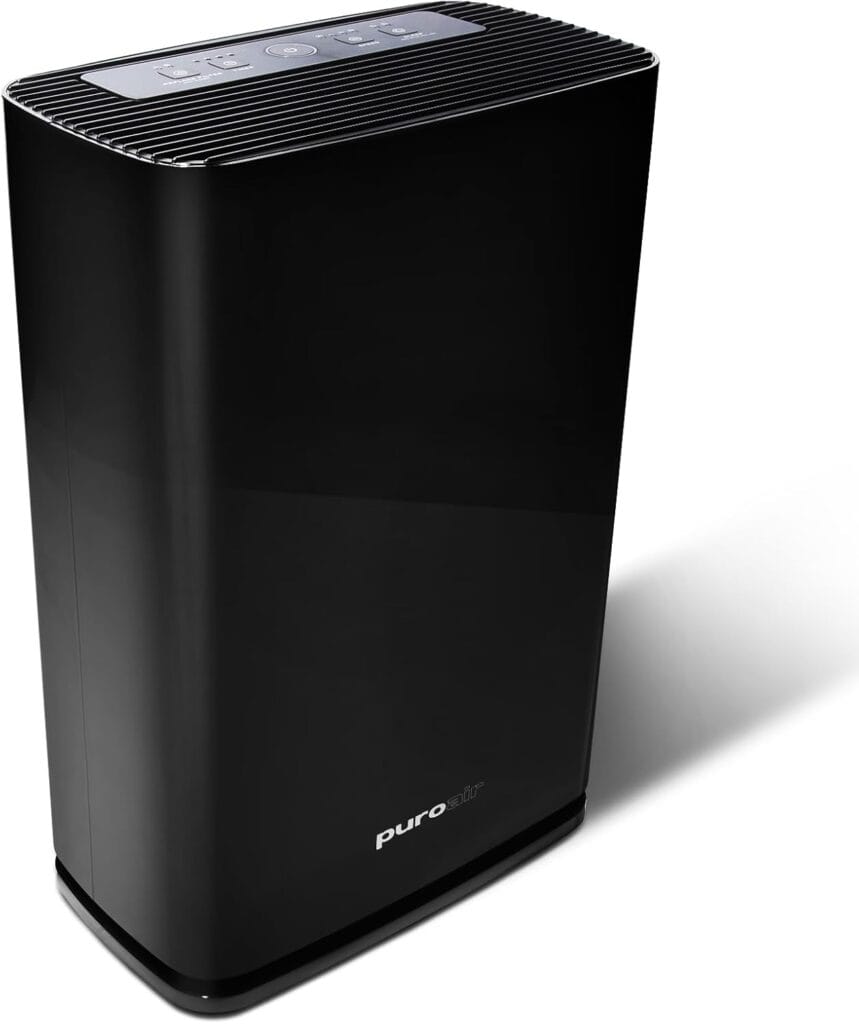
Key Specifications
- Coverage Area: Up to 2,000 sq. ft.
- CADR Rating: 262 CFM (Dust), 286 CFM (Pollen), 236 CFM (Smoke)
- Filtration: 3-stage with HEPA filter capturing 99.9% of particles
- Noise Level: 27-60 dB
- Dimensions: 8.1″ x 14.4″ x 21.5″
- Weight: 14.73 lbs
- Power Consumption: 80W
Pros
- Highest coverage area (up to 2,000 sq. ft.)
- Most powerful filtration in the PuroAir lineup
- Full suite of features including air quality sensor
- Ideal for large open spaces and multi-room coverage
- Excellent for allergy and asthma sufferers
Cons
- Highest price point in the PuroAir range
- Largest and heaviest model
- Higher power consumption
- Can be louder at maximum settings
- Most expensive replacement filters
Maximum Power for Large Homes
The PuroAir 400 delivers exceptional air purification for large spaces up to 2,000 sq. ft. Perfect for open floor plans, great rooms, or providing whole-home coverage.
Performance Comparison: How the PuroAir Models Stack Up
Air Purification Efficiency
All three PuroAir models use the same 3-stage filtration system consisting of a pre-filter, HEPA filter, and activated carbon filter. This combination effectively captures up to 99.9% of airborne particles as small as 0.3 microns, including dust, pollen, pet dander, smoke particles, and certain bacteria.
The main difference between models is their Clean Air Delivery Rate (CADR), which indicates how quickly they can filter the air in a given space:
- PuroAir 130i: With a CADR of 130 CFM, it can clean the air in a 600 sq. ft. room approximately 2 times per hour.
- PuroAir 240: With a CADR of 240 CFM, it can clean the air in a 1,000 sq. ft. room approximately 2.5 times per hour.
- PuroAir 400: With CADR ratings of 262 CFM (Dust), 286 CFM (Pollen), and 236 CFM (Smoke), it can clean the air in a 2,000 sq. ft. room approximately 1.5 times per hour.
Room Coverage
The coverage area specifications assume standard 8-foot ceilings and typical residential ventilation rates. For optimal performance, it’s recommended to choose a model that exceeds your room size slightly:
| Room Size | Recommended Model | Air Changes Per Hour |
| Small (up to 300 sq. ft.) | PuroAir 130i | 4+ |
| Medium (300-600 sq. ft.) | PuroAir 130i or 240 | 2-4 |
| Large (600-1,000 sq. ft.) | PuroAir 240 | 2-3 |
| Very Large (1,000-2,000 sq. ft.) | PuroAir 400 | 1-2 |
Noise Levels
Noise level is an important consideration, especially for bedrooms or quiet spaces:
- PuroAir 130i: 24dB (Sleep Mode) to 52dB (High) – Comparable to a whisper at lowest setting and a quiet conversation at highest setting.
- PuroAir 240: 24dB (Sleep Mode) to 54dB (High) – Similar to the 130i but slightly louder at maximum speed.
- PuroAir 400: 27dB (Sleep Mode) to 60dB (High) – Noticeably louder at maximum settings, comparable to normal conversation.
Energy Consumption
Power usage increases with the size and capacity of the air purifier:
- PuroAir 130i: 40W maximum power consumption
- PuroAir 240: 60W maximum power consumption
- PuroAir 400: 80W maximum power consumption
All models feature energy-saving modes that reduce power consumption when air quality is good or during scheduled times.
Smart Features
All PuroAir models include air quality sensors that monitor particulate matter in real-time and display the current air quality level. The 240 and 400 models offer more advanced features:
- PuroAir 130i: Basic air quality sensor, sleep mode, and timer functions.
- PuroAir 240: Enhanced air quality sensor with auto mode, sleep mode, timer, and child lock.
- PuroAir 400: Full suite of features including enhanced air quality sensor, auto mode that adjusts fan speed based on air quality, sleep mode, timer, and child lock.
Editor’s Choice: Which PuroAir Model Is Best?
Best Overall: PuroAir 240
After comparing all three models, we’ve selected the PuroAir 240 as our Editor’s Choice for most households. It offers the best balance of performance, features, and value, effectively cleaning the air in medium to large rooms while remaining reasonably priced.
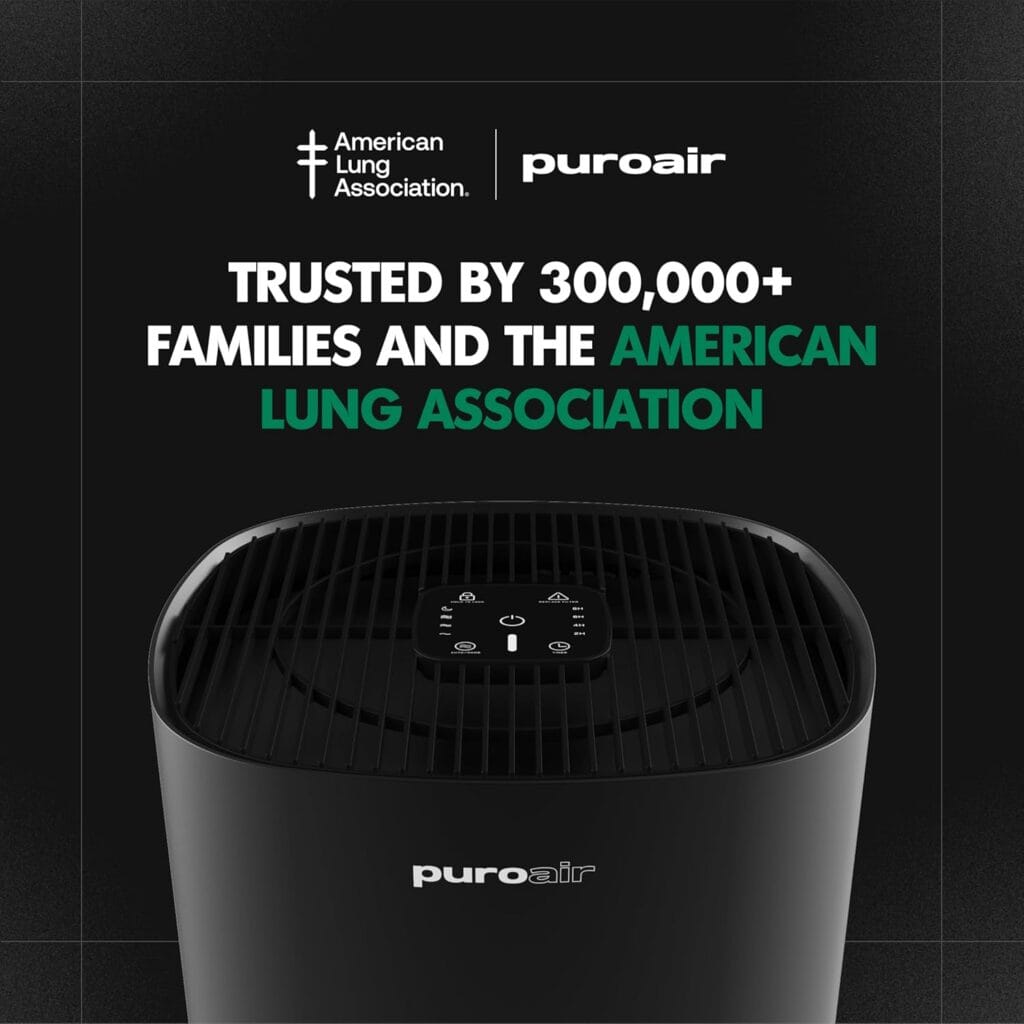
Our Top Recommendation
The PuroAir 240 hits the sweet spot for most homes with its excellent coverage, powerful filtration, and reasonable price point.
Best for Different Scenarios
Best for Small Rooms
PuroAir 130i
Perfect for bedrooms, nurseries, and home offices up to 600 sq. ft. where quiet operation is essential.
Best Value
PuroAir 240
The ideal balance of performance and price for most living rooms and medium-sized spaces up to 1,000 sq. ft.
Best for Large Spaces
PuroAir 400
Maximum power for open floor plans, great rooms, and large spaces up to 2,000 sq. ft.
Best Alternatives to PuroAir Air Purifiers
While PuroAir offers excellent air purifiers, you might want to consider these alternatives in the same category and price range:
Blueair Blue Pure 211i Max
Best Alternative to PuroAir 400
- Coverage: Up to 3,048 sq. ft.
- HEPASilent technology
- Smart app control
- Excellent for smoke and odors
Price: $299.99
LEVOIT Core300-P
Best Alternative to PuroAir 130i
- Coverage: Up to 1,000 sq. ft.
- AHAM verified true HEPA
- Super quiet sleep mode
- Compact and energy efficient
Price: $99.99
Coway Airmega AP-1512HH
Best Alternative to PuroAir 240
- Coverage: Up to 360 sq. ft.
- Auto mode with air quality sensor
- Eco mode for energy saving
- Excellent build quality
Price: $189.99
Filter Replacement Guide
All PuroAir models use replaceable filters that need to be changed every 3-6 months depending on usage and air quality conditions. Here’s what you need to know about filter replacement:
| Model | Replacement Filter | Estimated Cost | Replacement Frequency |
| PuroAir 130i | PuroAir 130i Replacement Filter | $37.99 (single) / $67.99 (2-pack) | Every 3-6 months |
| PuroAir 240 | PuroAir 240 Replacement Filter | $48.00 (single) / $75.00 (2-pack) | Every 3-6 months |
| PuroAir 400 | PuroAir 400 Replacement Filter | $129.99 (2-pack) | Every 3-6 months |
Filter Replacement Tips
- Set a reminder to check your filter every 3 months
- Replace filters more frequently if you have pets, allergies, or live in an area with poor air quality
- Some PuroAir models have filter replacement indicators that will alert you when it’s time to change
- Always turn off and unplug your air purifier before replacing the filter
- Consider purchasing multi-packs of filters to save money in the long run
Frequently Asked Questions About PuroAir Air Purifiers
How do I know which PuroAir model is right for my room size?
Measure your room’s square footage (length × width) and choose a model that covers at least that area. For optimal performance, we recommend selecting a model that exceeds your room size by 20-30%. The PuroAir 130i is ideal for rooms up to 600 sq. ft., the 240 for rooms up to 1,000 sq. ft., and the 400 for spaces up to 2,000 sq. ft.
How often do I need to replace the filters?
PuroAir recommends replacing filters every 3-6 months depending on usage and air quality. If you have pets, allergies, or live in an area with poor air quality, you may need to replace them more frequently. Some models have filter replacement indicators that will alert you when it’s time for a change.
Are PuroAir air purifiers energy efficient?
Yes, all PuroAir models are designed to be energy efficient. The 130i uses up to 40W, the 240 uses up to 60W, and the 400 uses up to 80W at maximum settings. All models feature energy-saving modes that reduce power consumption when air quality is good or during scheduled times.
Do PuroAir air purifiers produce ozone?
No, PuroAir air purifiers do not use ionizers or UV-C light that can produce ozone. They rely on mechanical filtration through HEPA filters and activated carbon, which do not generate any harmful byproducts.
Can PuroAir air purifiers help with allergies?
Yes, PuroAir air purifiers can help reduce allergy symptoms by removing common allergens like pollen, pet dander, dust mites, and mold spores from the air. The HEPA filters can capture particles as small as 0.3 microns with up to 99.9% efficiency.
Final Verdict: Which PuroAir Air Purifier Should You Choose?
After thoroughly comparing the PuroAir 130i, 240, and 400 models, here are our final recommendations:
Choose the PuroAir 130i if you need an affordable, compact air purifier for bedrooms, small offices, or spaces up to 600 sq. ft. where quiet operation is essential.
Choose the PuroAir 240 if you want the best balance of performance, features, and value for medium to large rooms up to 1,000 sq. ft. This is our Editor’s Choice for most households.
Choose the PuroAir 400 if you need maximum coverage for large open spaces up to 2,000 sq. ft. or if you have severe allergies and want the most powerful air purification.
All three PuroAir models offer excellent air purification with their 3-stage filtration systems, capturing up to 99.9% of airborne particles. Your choice ultimately depends on your room size, specific needs, and budget considerations.
Ready to Breathe Cleaner Air?
Invest in a PuroAir air purifier today and experience the difference that truly clean air can make in your home and health.