Kate Donovan
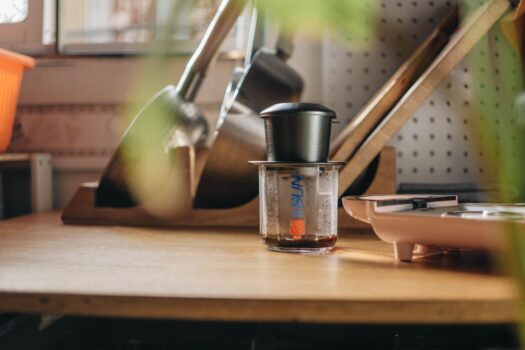
Choose the brewing method before filling the cart.
A cart containing a French press, paper filters, and an espresso tamper mixes tools from three different brewing setups. The press uses neither the filters nor the tamper, so buying everything “just in case” adds cost without making the first cup easier.
Start with a brewer, coffee, water, and a mug. Then add only what that brewer requires: a French press needs a way to heat water, a pour-over dripper needs compatible filters and a kettle, and an electric drip machine heats its own water. A grinder is useful for whole beans, but pre-ground coffee can keep the initial setup smaller. Espresso calls for its own machine and accessories rather than upgrades to a basic filter-coffee setup.
The minimum coffee setup
A basic setup needs coffee, drinkable water, a brewer, and a cup or other serving vessel. The coffee should be ground appropriately for the chosen brewer. Water that tastes clean on its own is a sensible starting point, since it makes up most of the finished drink.
A filter is needed only when the brewer calls for one. A pour-over dripper generally needs a matching paper filter; a French press has a built-in metal screen. For hot coffee, there must also be a way to heat water unless the brewer heats it itself. That can be an existing stovetop kettle or saucepan rather than a new purchase.
Everything else can wait for a reason. A scale becomes useful when inconsistent measurements make cups vary; a dedicated kettle helps when pouring control matters. Neither is a prerequisite for making the first cup.
Automatic drip or cold brew?
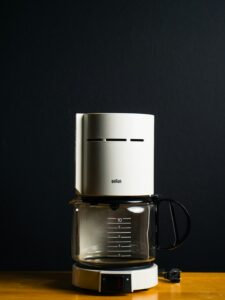
Automatic drip needs an outlet, ground coffee, and a filter that fits the machine’s basket. Some machines use paper filters; others include a reusable filter. Check the required size before buying either. The machine heats the water, so a separate kettle is unnecessary.
Capacity changes the setup. A full-pot machine takes more counter space and needs a carafe. A glass carafe commonly sits on a warming plate; a thermal carafe keeps coffee warm without one. For a single drink, a smaller brewer avoids making an unwanted pot.
Cold brew needs no powered brewer. A covered, food-safe jar or pitcher can hold the coffee and water, while a mesh insert or separate strainer removes the grounds. Fine sediment may still need a paper filter. Check that the container fits the refrigerator with its lid on, and allow room to store the finished coffee after straining.

This compact electric drip brewer makes one serving of ground coffee in an included 14-ounce travel mug. Its reusable filter eliminates paper filters, but it cannot use pods.
The mug is not insulated. Coffee intended to stay hot needs a different vessel.
Pour-over, French press, or moka pot?
These brewers need different filters and heat sources. All can use pre-ground coffee, provided the grind suits the method.
- Pour-over: A dripper, a matching paper filter (unless the dripper has a reusable filter), a mug or carafe, and a kettle to heat water. A medium grind lets water pass through the grounds at a useful pace. If the brew drains quickly and tastes weak, try a slightly finer grind before buying another accessory.
- French press: A press with its mesh plunger, a kettle, and a mug. No paper filter is required: the grounds steep in water, then the mesh holds most of them back during pouring. Coarse grounds make pressing easier and help limit sediment; pouring gently rather than tipping out the last drops can also keep grit out of the cup.
- Moka pot: A complete pot with its metal filter basket and gasket, a compatible stovetop or other approved heat source, and a cup. The pot heats water in its lower chamber and pushes it through the coffee; it needs no separate kettle or paper filter. Use a medium-fine grind, leave the basket untamped, and remove the pot from heat as brewing finishes to help avoid a harsh, bitter cup.
When does a grinder matter?
A grinder is optional when starting with pre-ground coffee. Buying smaller amounts ground for the intended brewer avoids another purchase. A grinder becomes more useful when buying whole beans, since coffee can then be ground just before brewing.
Burr grinders crush beans between two surfaces set a chosen distance apart. That adjustment gives more control over grind size than a blade grinder, which chops beans until it is stopped. A blade grinder costs less, but its mix of fine and coarse particles makes repeatable brewing harder. For pour-over, where water passes through a bed of grounds, a burr grinder is the more useful upgrade.
Space and routine matter too. A hand grinder takes little counter space and suits one or two cups, but requires effort for every batch. An electric burr grinder is more convenient for larger batches. Espresso calls for especially fine, precise adjustment, so a low-cost grinder marketed for several brew methods is not necessarily an espresso solution. For a modest pour-over budget, the hand grinders under $100 worth comparing offer a focused place to start.
At about $20, this compact burr grinder offers an inexpensive way to grind whole beans for pour-over. Its listed 40 external settings allow grind adjustments without opening the mill.

Heating water without buying a kettle
Pour-over and French press need hot water, but neither requires a dedicated kettle. An automatic drip machine heats its own water, while cold brew needs no heat. An existing stovetop kettle can serve a manual brewer.
For pour-over, a steady stream helps wet the grounds without flooding the filter. A gooseneck spout makes that easier, but an ordinary kettle can work with slow, short pours. French press needs hot water, not precise pouring. Try the kettle already on hand before buying another.

This 0.6-liter electric kettle heats water and provides a narrow spout for controlled pour-over pours.
It has 1,200-watt heating, automatic shutoff after boiling, and boil-dry protection. Larger batches may require a refill.
Measuring coffee and choosing filters
A scoop is enough to get started if the routine stays consistent: use the same scoop, fill it the same way, and measure water with the same marked vessel. The result may not be exact, but it gives each brew a useful starting point. If the coffee tastes too strong or weak, change one amount at a time.
A digital scale makes those changes easier to repeat because it measures coffee and water by weight rather than relying on scoopfuls and fill lines. It is particularly useful for pour-over, where both the amount of water and how it is added affect the brew. A scale is not required for a first attempt; the pour-over scale decision depends on how much consistency and recipe control matter.
Before buying filters, check the brewer’s instructions for the specified size, shape, and material. Paper filters made for one dripper may not fit another. French presses and some other brewers use reusable built-in filtration, so no disposable filters are needed.
What does an espresso setup need?
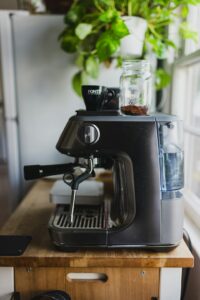
Espresso is a bigger equipment commitment than the brewing methods above. An espresso machine heats and pressurizes the water, while its portafilter and basket hold the coffee. A separate kettle is unnecessary, but freshly ground coffee generally calls for a grinder with fine, precise adjustments; a grinder suited to drip coffee may not offer enough control.
Check what comes in the machine’s box before buying accessories. Portafilters and baskets are usually supplied, and some machines include a tamper or a scoop-and-tamper combination. If the machine has a compatible pressurized basket, it may also provide a way to start with pre-ground coffee, though that does not replace the control of an espresso-capable grinder.
A tamper is needed to press the grounds evenly, but an upgrade is not automatically necessary. If buying one, match its diameter to the basket rather than assuming all portafilters take the same size. A scale can make dosing and shot yields more repeatable; under a low-clearance group head, check that the scale and cup fit between the portafilter and drip tray. Milk pitchers and distribution tools can wait unless the drinks being made call for them.
Plan for cleanup, too
The purchase price is not the whole ownership cost. A brewer needs washing, and a machine or grinder may need cleaning supplies that are easy to overlook.
After brewing, empty used grounds or filters and wash the parts that touch coffee, following the maker’s instructions. A soft sponge and bottle brush can help with carafes and narrow containers; some removable parts may be dishwasher-safe, while others require hand-washing. For espresso equipment, check the manual for its portafilter and steam-wand cleanup steps.
Periodically, coffee residue can build up in a grinder, while mineral deposits can collect inside a water-heating brewer. A grinder brush helps clear dry grounds; keep water away from burrs unless the manufacturer explicitly permits it. If the brewer calls for descaling, budget for a manufacturer-approved descaling product and follow its directions rather than assuming a household acid is suitable. How often these tasks are needed depends on the equipment, use, and water hardness.
A short shopping list for pour-over coffee
-
Choose a dripper and mug
Check that the dripper fits the mug and makes enough coffee for a typical serving.
-
Use an existing heat source
A stove and pot can heat the water; a new kettle is not required to begin.
-
Buy matching filters
Check the dripper’s size and shape before buying paper filters.
-
Choose suitable coffee
Start with coffee ground for pour-over. Pre-ground coffee avoids the immediate cost and space needed for a grinder.
-
Add tools only to fix a problem
A scale can help if batches vary in strength; a gooseneck kettle can help if pouring is difficult to control. Before either purchase, check counter space, cleanup, serving size, and the total cost.
A dripper, a way to heat water, matching filters, and suitable coffee are enough to start. Other tools can wait until a specific difficulty makes them worthwhile.