Kate Donovan
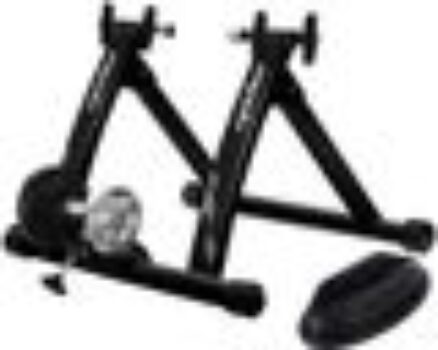


Last update on 2026-10-02 at 07:27 / Affiliate links / Images from Amazon Product Advertising API
Surprising fact: over 60% of cyclists report better consistency after switching to smart indoor training, even when weather or daylight blocks outdoor riding.
This buyer’s guide compares the top options you can buy right now. It’s not a one-size-fits-all pick. Think of choosing a trainer like picking between a compact grill and a full outdoor kitchen — your space and goals matter.
Smart trainers pair with apps like Zwift, FulGaz, Wahoo X, and TrainingPeaks to give motivation, structured workouts, and measurable progress. Direct-drive models tend to be quieter and more accurate than wheel-on setups.
What you’ll find here: ten picks across categories — overall, value, premium road feel, sprint stability, small-space, budget wheel-on, quick setup, dedicated smart bike, Zwift value setup, rollers, and a travel warmup option.
What we compare: accuracy, road feel, connectivity, noise, stability, and setup friction. This guide exists to help you buy or upgrade without costly mismatches.
Who this is for: time-crunched riders doing 30-minute ERG sessions, racers chasing hard workouts, and anyone who wants reliable indoor riding across price points and models.
Why Indoor Training With a Smart Trainer Makes Sense in 2026
When rain, schedules, or short days block your rides, a smart setup keeps your training on track. Think of it as a gym membership that’s already in your house: no travel, no waiting, just consistent sessions you can trust.
Quick, quality sessions: If you only have 45 minutes, indoor training removes warm-up logistics, traffic stops, and route planning. Plug in, connect an app, and get focused work done.
Virtual platforms and motivation
Virtual riding through Zwift, FulGaz, Wahoo X, and TrainingPeaks Virtual turns drills into races, climbs, and coached intervals. That variety keeps you engaged and makes it easier to stick with a plan.
Feedback, data, and measurable progress
Smart trainers adjust resistance automatically, creating a tight feedback loop—like a treadmill setting pace for you. Power, cadence, and workout compliance are recorded so you can track progress every week.
Who benefits most?
Beginners get consistency. Experienced riders preserve fitness through structured sessions. Racers can chase intervals without traffic or weather risk. App choice matters too—features like virtual shifting vary by platform, and we cover those differences later.
| Benefit | How it helps | Example app | Who benefits |
|---|---|---|---|
| Consistency | Ride regardless of weather or daylight | Zwift | Beginners & commuters |
| Structured workouts | Automatic resistance and repeatable sessions | TrainingPeaks Virtual | Racers & time-crunched riders |
| Motivation | Racing, routes, and coached sessions | FulGaz / Wahoo X | Social riders & competitive users |
| Measurable data | Power, cadence, and compliance tracking | All major apps | Progress-focused riders |
Bike Trainers: Quick Snapshot of the Main Types
Not all indoor setups work the same—knowing the main types helps you pick what fits your space and goals. Below is a short primer so you can self-sort fast and move to the evaluation that matters for your needs.
Direct-drive vs. wheel-on
Direct-drive units replace your rear wheel and attach your bike to the hub. That setup removes tire-to-roller noise, improves power accuracy, and often feels quieter and more stable.
Wheel-on models press a roller against the rear tire. Think of a rolling pin under your tire: simple and lighter, but louder and prone to faster tire wear if you use an outdoor tire indoors.
Rollers and fork-mount travel units
Rollers let you balance and steer, so the feel is closest to real riding. They demand focus and are not ideal if you want to zone out during intervals.
Fork-mount travel units are lightweight and packable. They’re great for warmups and race-day prep, though most lack automatic resistance control.
Dedicated smart bikes
These are the permanent appliance option for a dedicated space. No swapping wheels, no drivetrain compatibility headaches, and instant hop-on convenience for frequent sessions or multiple riders.
| Type | How it mounts | Pros | Cons |
|---|---|---|---|
| Direct-drive | Removes rear wheel, mounts bike to hub | High accuracy, low noise, stable | Higher weight, pricier, needs cassette |
| Wheel-on | Rear wheel stays on, roller presses tire | Cheaper, lighter, simple setup | Noisier, tire wear, less accurate |
| Rollers | Bike sits free on spinning drums | Realistic balance and feel | Hard to use for zoned, hands-off intervals |
| Fork-mount travel | Front fork locks into a small stand | Ultra-portable, low weight | Usually not smart, limited features |
| Dedicated smart bike | Integrated frame with onboard resistance | No swapping, quick entry, consistent fit | Highest cost, permanent footprint |
Next up: evaluation criteria change depending on which type you consider. Expect different priorities for accuracy, noise, weight, and space.
How We Evaluated These Bike Trainers for This Buyer’s Guide
Short version: we measured how each device connects, how steady its numbers stay, and how real the ride feels. Then we tested longevity, daily setup time, and whether it fits an apartment or a garage.
Connectivity and real-world pairing
Good connectivity means fewer dropouts and fast pairing with ANT+ FE‑C and Bluetooth FTMS. We checked how units behaved in crowded homes with many signals.
Wahoo KICKR V6’s Wi‑Fi adds stability in busy networks. We also confirmed that most units work with common apps, and noted when Wi‑Fi prevents mid-workout frustration.
Power accuracy and repeatability
We logged power accuracy across sessions. If you target 250W, a reliable unit stays within a few percent and gives consistent data day to day.
We report both peak power handling and median accuracy from repeated intervals.
Road feel, flywheel, and ride experience
We judged inertia and responsiveness by flywheel weight and tuning. Heavier flywheel setups often mimic outdoor coasting better.
Tacx NEO models added surface vibration and downhill freewheeling in our tests, which improved the overall ride experience.
Design, durability, and daily usability
We inspected sweat protection, corrosion risk, and build quality. A well-made trainer survives years of indoor miles without drivetrain damage.
Setup time and portability
We timed initial setup, routine calibration, and firmware steps. Quick start wins at 6 a.m.
We noted weight, handles, and whether the unit folds for closet storage versus needing a permanent corner.
| Metric | Why it matters | What we tested |
|---|---|---|
| Connectivity | Stable link to apps | ANT+ FE‑C, BT FTMS, Wi‑Fi |
| Power accuracy | Trustworthy training | Repeated intervals, steady-state power |
| Portability | Space and storage | Weight, handles, foldability |
Buying Criteria That Actually Matter for Most Riders
Not every spec matters equally; focus on the few that change your daily workouts the most.
Power accuracy and how it compares to a power meter
Power measurement is like a bathroom scale: some units are “close enough” for steady progress, while tight goals need precision. If you race or follow strict plans, a unit with ±1% accuracy (for example, the KICKR V6) is worth it.
Trainer-reported power differs from a power meter on pedals, crank, or hub. Trust a dedicated meter for absolute numbers; use trainer power for consistency when it stays calibrated.
Max watts and simulated grade
Look at max power output and peak watts. Sprinting or VO2 work can spike above 1,800–2,000W; check if the unit handles short bursts without clipping.
Max grade affects how steep climbs feel in apps. It changes gearing needs and realism more than it changes training value.
ERG mode behavior and avoiding “death spirals”
ERG mode should change resistance smoothly. Some models slam resistance and feel abrupt; that can trigger a “death spiral” when cadence falls (seen on some Elite Zumo setups).
Pick a unit with predictable erg behavior or good companion app tuning to avoid cadence drops ruining intervals.
Ride feel, flywheel weight, noise, and space
Flywheel inertia determines the ride feel. Think of it like a merry-go-round: too light = twitchy, too heavy = sluggish. Aim for a balanced flywheel weight for realistic coasting.
Expect different noise level profiles: wheel-on units (like Tacx Boost) emphasize tire and drivetrain sound. Direct-drive units (KICKR Core) tend to be quieter.
Also check stability and footprint. If you stand for sprints, you need a stable base and a dedicated space where the unit won’t shift.
Connectivity stability
Dropouts break races and intervals. In crowded wireless homes, Wi‑Fi on models like the KICKR V6 can reduce interruptions versus Bluetooth-only setups.
Connectivity matters more than specs on a sheet—stable signals keep your training smooth.
- Quick checklist: accuracy vs a power meter, max watts, ERG smoothness, flywheel feel, noise profile, stability footprint, and connectivity.
| Criterion | Why it matters | Data point to check |
|---|---|---|
| Power measurement | Trustworthy workouts and comparisons | Claimed accuracy (±%) or use of external power meter |
| Max power output (watts) | Handles sprints and high-intensity efforts | Peak watts rating |
| ERG mode | Smooth intervals without cadence crashes | ERG responsiveness and user reports |
Best Overall Smart Bike Trainer
If you need repeatable numbers and fuss-free connections, the Wahoo KICKR V6 is the reference most riders use to compare others.
Why it sets the bar
The wahoo kickr claims ±1% accuracy, giving you trustworthy power for structured plans. Its ERG mode ramps resistance smoothly and holds targets without that “pedal through mud” feeling.
Real-world connectivity
Built-in Wi‑Fi improves reliability in crowded homes. If you run multiple devices or ride with roommates, Wi‑Fi cuts dropouts that Bluetooth-only setups can suffer.
Edge-case note and fixes
In rare cases—very high sustained watts at low cadence—power drift can appear. Wahoo addresses this with firmware updates and a Multi-Point Spindown procedure via the Wahoo apps.
- Who should buy: racers, frequent indoor riders, and anyone who wants “set it up and forget it” performance.
- Consider the KICKR MOVE if you want motion for a more natural road ride and less locked-in feel.
| Model | Strength | When to prefer |
|---|---|---|
| wahoo kickr V6 | 1% accuracy, solid ERG, Wi‑Fi | Precision and stable connectivity |
| KICKR MOVE | Motion, immersive feel | Comfort on long sessions |
Best Value Direct-Drive Trainer
If you want direct-drive performance without flagship prices, this pick hits that sweet spot.
The wahoo kickr core line delivers the direct drive feel and smart control most riders want, at a friendly price. Core models run near-silent and give dependable power for structured sessions.
Core vs Core 2: practical difference
The original kickr core is a solid value. The Core 2 adds practical upgrades: 1800W max, 16% grade simulation, and ±2% accuracy. You also get small stability and firmware refinements that make daily use smoother.
Zwift Cog + Click: virtual shifting explained
Zwift Cog + Click gives 24 virtual gears so multiple road setups can use one trainer without swapping cassettes—handy if your household shares equipment. Think of it as a universal remote for gearing.
One clear limit: virtual shifting works only in Zwift. If you ride other apps a lot, choose a Core that comes with a cassette instead.
What you give up vs premium models
You lose peak watts/grade ceiling and some premium extras like advanced motion or top-tier connectivity. For most riders the trade-off is worth it: you keep accurate power output and stable ERG control without flagship cost.
- Who should buy: regular indoor riders, Zwift users, and multi-rider homes seeking value.
- Who should skip: elite sprinters and racers who need the highest watt ceilings or every premium feature.
| Model | Max watts | Accuracy |
|---|---|---|
| kickr core | varies (close to Core 2) | ~±2% |
| wahoo kickr core 2 | 1800W | ±2% |
Best Premium “Road Feel” Smart Trainer
If you crave indoor riding that actually feels like the road, the Garmin Tacx NEO 3M sits at the top of that list. It blends motion, texture, and realistic coasting so sessions feel more like outdoor miles and less like spinning in place.
Garmin Tacx NEO 3M: motion, surface simulation, and downhill realism
The NEO 3M adds physical movement and surface vibration that simulates cobbles or gravel on supported apps like Zwift. You actually feel the road change under you, which makes climbs and efforts feel more convincing.
It also offers true downhill freewheeling—on descents the trainer lets you coast. That rare feature reduces the “always pushing” sensation of many direct‑drive trainers and improves pacing on long rides.
No power cord operation: why it’s useful (and what you lose unplugged)
You can run the unit cord‑free for a cleaner setup or when outlets are awkward. That’s handy if you move the unit frequently or want minimal cables.
Unplugged, some terrain haptics and downhill features are disabled. Power, max watts (~2,200W), and core accuracy (
Tacx NEO 2T vs NEO 3M: deciding based on features and price drops
The 2T still delivers excellent road feel, downhill freewheeling, and solid accuracy via ANT+ FE‑C and Bluetooth FTMS. It often appears at discounts, making it a strong value for realism.
The 3M upgrades motion and surface simulation. It’s heavier and pricier, and lacks built‑in Wi‑Fi (an accessory exists), so pick the 3M if immersion is your top priority; choose the 2T if you want high performance at a better price.
- Who this suits: riders who prioritize realistic ride feel and indoor immersion.
- Downsides: heavy, expensive, and not ideal if you need a highly portable unit.
| Model | Max Watts | Notable Feature |
|---|---|---|
| NEO 3M | ~2200W | Integrated motion & surface simulation |
| NEO 2T | Varies (high) | Freewheeling, strong discounts |
| Other direct‑drive trainers | Varies | Usually lighter on immersion |
Best Stable Trainer for Hard Intervals and Sprint Work
For riders who stand, sprint, and attack, a stable platform beats bells and whistles every time. The Saris H3 and H3 Plus are built around that idea: steady feet, predictable power, and no drama when you hit high watts.
Saris H3 / H3 Plus performance highlights
Stability as a performance feature: a solid frame stops lateral wobble so you can stand and sprint without holding back. That stability matters during HIIT and group-race practice.
Resistance and ERG behavior: resistance changes are smooth and immediate, so intervals feel repeatable. The H3 Plus targets ~2,000W and ~20% grade, which covers most training needs.
Accuracy, connectivity, and setup
Claimed accuracy is ±2%, good enough for structured power-based training without overthinking small discrepancies. It pairs via ANT+ FE‑C and Bluetooth with popular apps.
The Saris companion app mainly handles firmware and spindown calibration. After that, day-to-day use is simple: plug in, connect, and ride.
- Who should buy: riders focused on repeatable HIIT, Zwift sprints, and standing efforts.
- Who might look elsewhere: users chasing motion plates or heavy terrain simulation for immersion.
| Model | Max watts | Accuracy |
|---|---|---|
| Saris H3 | ~2000W | ±2% |
| Saris H3 Plus | ~2000W, 20% grade | ±2% |
| Connectivity | ANT+ FE‑C | Bluetooth FTMS |
Best Mid-Range Smart Trainer for Indoor Racing and Small Spaces
Small spaces demand smart choices; the Elite Suito T folds flat, has a built-in carry handle, and packs enough power for serious indoor racing. If you live in an apartment, foldability and light weight turn a permanent pain cave into a usable living area.
The Suito T is a direct-drive unit that feels stable thanks to four points of contact. It manages up to ~1900 watts, so surges and sprint attacks in Zwift won’t clip the power output you need.
What to know about the cassette
It doesn’t come with a cassette. That means you must buy a cassette that matches your drivetrain and install it on the rear freehub before riding. If you’re not comfortable doing that, budget for a shop install or choose a bundle with a cassette included.
- Value: strong max watts for the price and a stable platform that won’t feel sketchy under load.
- Noise: as a direct-drive trainer, it’s generally quieter than wheel-on units; expect fan and drivetrain sounds to dominate.
- Setup: foldable, easy to store, and light enough to move; ideal when space is limited.
| Feature | Why it matters | Quick spec |
|---|---|---|
| Foldability | Makes daily storage simple in small homes | Folds flat, built-in handle |
| Max watts | Handles race surges and sprints | ~1900 watts |
| Cassette | Must match your rear drivetrain; required for use | Not included — buy/install separately |
| Stability | Stand and sprint without lateral wobble | Four contact points, stable frame |
If you want a capable, pack-away option that still races well, the Elite Suito T delivers value and performance without monopolizing your living space.
Best Wheel-On Trainer for Budget Indoor Riding
If you want a low-cost way to keep training through bad weather, the Tacx Boost bundle is the straightforward choice. It’s a wheel-on option that gets the job done without premium features.
What’s in the box: the trainer, a Garmin speed sensor, and a front wheel block to level your bike. The magnetic roller offers 10 manual resistance levels you change by hand.
Tacx Boost bundle: speed-sensor basics and what you can (and can’t) control
Apps use the speed sensor to estimate power and pace. That means you can ride virtual routes, but the app cannot change resistance for you. Think of it as a TV with no smart remote—you must adjust the dial yourself.
Rear wheel tire wear, noise, and why slick tires matter
Wheel-on units wear the rear wheel faster than direct-drive options. A dedicated trainer slick or an old road tire saves money and reduces tire heat buildup.
Expect most of the sound to come from the tire rolling on the drum and your drivetrain. A slick tire lowers the noise level, which helps if you live in an apartment.
Who should buy it: beginners, occasional riders, and anyone who wants a low‑price, simple setup for basic indoor riding.
| Feature | Detail | Why it matters |
|---|---|---|
| Included items | Trainer, Garmin speed sensor, front block | Ready to ride with minimal extra purchases |
| Resistance | 10 manual levels (magnetic) | You control intensity, not the app |
| Compatibility | Works with virtual apps via speed data | Can join group rides but lacks smart ERG control |
| Tire wear & noise | Higher wear; audible roller sound | Use slick trainer tire to reduce wear and buzz |
Best Quick Setup Trainer If You Don’t Want to Remove the Rear Wheel
Want the fastest hop-on-and-ride option? The Wahoo KICKR ROLLR is built for convenience: no rear wheel removal, minimal fuss, and a genuine “leave the bike as-is” workflow that gets you riding in seconds.
Wahoo KICKR ROLLR: fast on/off convenience and real-world tradeoffs
The ROLLR clamps your front wheel, supports the rear wheel on rollers, and uses an external flywheel to smooth out resistance. That design makes setup extremely fast and keeps your drivetrain untouched.
Core appeal: if removing the rear wheel feels like a morning chore you won’t do, this model makes daily use painless. You literally walk in, clip the front, and ride.
Why a power meter changes everything for accuracy and smart control
The ROLLR relies on your bike’s power meter for trustworthy power measurement and ERG-like control in apps. Without a power meter, accuracy and automated resistance control drop back to speed‑based estimates.
Bottom line: this is an excellent choice if you already own a reliable power meter. Otherwise you’ll trade convenience for poorer power accuracy.
Tire width limits, loudness, and space footprint considerations
Fit matters. The unit accepts tires up to roughly 2.1″ (some recommend ≤45mm for best contact), so large gravel tires or long-wheelbase frames may not seat properly.
Expect higher noise level and a larger footprint than many direct‑drive options. If you live in an apartment or need crisp sprint stability, measure your space and consider a direct‑drive alternative.
| Feature | What to expect | Who benefits |
|---|---|---|
| Setup | Instant—no rear wheel removal | Riders who value speed and convenience |
| Power & accuracy | Best with a power meter; speed-only less precise | Users with existing power meters |
| Tire limit | Up to ~2.1″ (recommend ≤45mm) | Road and compact gravel riders |
| Stability & resistance | Good for steady efforts; less ideal for heavy standing sprints | Commuters, time-crunched riders |
| Noise & footprint | Louder than direct‑drive; takes more floor space | Avoid if you need a low-noise, small setup |
Best Dedicated Indoor Bike for a Permanent Setup
For riders who want instant, no-fuss sessions, a dedicated indoor machine turns training into a daily habit. The Wahoo KICKR BIKE PRO is the appliance option: permanent, tuned, and always ready.
The main appeal is convenience. You never remove a rear wheel, swap a cassette, or fuss with alignment. That makes the morning hop-on far easier than using a traditional trainer.
Wahoo KICKR BIKE PRO: incline/decline simulation and drivetrain feel
The unit simulates steep climbs and descents, so apps change resistance to match grade. It also offers programmable drivetrain “feel like” modes—Shimano, SRAM, or Campagnolo—so shifting behaves the way you expect.
Who benefits most
If multiple people share gear or you train daily, a dedicated space pays off quickly. Easy adjustments and remembered fits mean different riders can swap seats and pedals without a long setup ritual.
- Appliance trade-off: like a second fridge—less portable, more convenience.
- Space note: you need a dedicated corner or small room; this is not a tuck-away unit.
- Value: you pay for consistency and near-instant readiness, not marginal watts gains.
| Feature | Why it matters | KICKR BIKE PRO |
|---|---|---|
| Instant readiness | No wheel or cassette swaps | Always setup, quick start |
| Realism | Grade and shifting simulation | Incline/decline + feel modes |
| Multi-rider fit | Fast adjustments for different users | Memory presets, wide adjust range |
| Space requirement | Permanent footprint | Dedicated space recommended |
Best Value Dedicated Setup for Zwift Riders
You can get near‑appliance convenience for much less by building a semi‑permanent Zwift station around a solid direct‑drive unit. This approach gives you fast hop‑on sessions and accurate power without the sticker shock of a full integrated machine.
Zwift ride with KICKR CORE: what you get vs higher-priced smart machines
The wahoo kickr core forms the foundation: stable direct‑drive resistance, reliable app pairing, and enough realism for most virtual riding sessions. Pair it with a Cog/Click bundle and swapping gearing between riders gets simple.
Compared to premium all‑in‑one systems, you give up built‑in incline motors and single‑frame adjustability. What you keep is core performance, smoother ERG control, and a lower price point that still supports serious training.
Fit constraints and storage as two pieces
Watch fit early: crank length, cockpit reach, and saddle height must match your outdoor position. Some frames or kits limit crank choices and make the fit feel off during long efforts.
Storing gear as two pieces (frame + trainer) can be easier in small homes, but it needs a planned spot. You still need a mat, fan, and possibly a cassette or adapters.
- Quick budget checklist: mat, fan, cassette (if not included), axle adapters, and a small tool kit.
| Item | Why it matters | Typical cost |
|---|---|---|
| KICKR CORE | Direct‑drive base for Zwift | $800–$1,000 |
| Cassette or Cog/Click | Gearing compatibility | $40–$120 |
| Accessories | Comfort and noise control | $50–$200 |
Best for Outdoor-Like Freedom of Movement
Rollers put you back in charge of balance, so indoor sessions feel more like real rides. The Elite Nero interactive rollers add app control and resistance while keeping that loose, road‑like feel.
Why rollers feel different: you must balance and steer, which trains handling the same way outdoor cycling does. That makes the session more active than a locked‑in trainer.
Technique and training benefits
Smoother pedaling, better core engagement, and improved bike handling are immediate payoffs. Use cadence drills, single‑leg reps, and balance work to refine form.
Virtual riding and immersion
Interactive rollers sync with apps for immersive routes. Because you control balance, group rides and long endurance sessions feel more engaging — a better mental experience than mowing through intervals on a fixed unit.
Intensity limits and who should avoid
High‑watt steady efforts and full‑on sprints can be harder on rollers. If you zone out, ride distracted, or need absolute sprint stability, stick with a direct‑drive option for max confidence.
Use case: winter base miles, cadence work, and skills practice. Start near a wall or doorway until you master balance.
| Feature | Benefit | Best for |
|---|---|---|
| Balance requirement | More road‑like feel | Handling & technique |
| Interactive app sync | Immersive virtual riding | Endurance rides & group sessions |
| Stability for sprints | Lower than direct drive | Not ideal for maximal watts |
Best for Travel and Race-Day Warmups
If you need something that fits a car trunk and sets up in minutes, look at fork‑mount travel options. They solve the most common travel problem: limited space, tight timelines, and the need for a fast, reliable warmup before a race.
Feedback Sports Omnium Over‑Drive: compact, light, and quick
What it does: the Omnium Over‑Drive replaces your front fork, so your wheel rides on a small roller. That keeps the rear drivetrain untouched and gives a stable, compact platform you can pack in a suitcase.
Why it helps: low weight and minimal parts mean fast setup in a parking lot, hotel room, or transition area. No fuss, no bulky case to wrestle with before a race.
What “no smart features” really means — and how to make them work for you
Plain language: it won’t change resistance for virtual hills and it won’t broadcast power by itself. You still get an effective warmup by using perceived effort, heart rate, or a power meter on your bike.
- Use your power meter or a heart‑rate monitor paired to an app to log effort and follow a simple plan.
- Keep cadence sensors handy if you want precise spin targets without a smart unit.
Example warmup (repeatable): 8 min easy spin, 3 × 20‑sec openers at race effort with 2 min easy between, then 5 min progressive build to race‑pace. Short, structured, and travel‑friendly.
Who should buy: racers and traveling cyclists who value portability over immersive home training. Tradeoff: for long indoor blocks, a smart trainer at home gives better ERG control and deeper metrics.
| Feature | Benefit | Notes |
|---|---|---|
| Portability | Fits luggage, low weight | Easy to pack and carry |
| Setup | Quick front‑fork mount | Fast in parking lots or hotels |
| Power & tracking | Use bike power meter or app | No built‑in power broadcast |
Compatibility Checklist Before You Buy
Before you click buy, run through this quick compatibility checklist so your new gear actually fits your bike and your space. Think of it as measure twice, ride once.
Rear axle standards made simple
Quick release or thru-axle? Most modern road and gravel frames use thru-axles. Common sizes you’ll see are 142×12 and 148×12. These numbers tell you the axle spacing and diameter.
Many direct- drive models accept adapters for both standards, but double-check the spec for your exact frame before ordering.
Cassette and freehub needs
Shimano and SRAM fit most trainer freehubs; Campagnolo needs a different driver body. Speed range matters too—8 to 12 speeds may require a swap or adapter.
Heads up: some units ship with an 11-speed cassette. If you run 12-speed or an MTB setup, you might need a different cassette or freehub purchase.
Bike types and fit quirks
Road and gravel bikes usually mount without drama. Long-wheelbase mountain frames can hit limits on certain wheel-on designs or on front-clamp models like the ROLLR.
If you own an uncommon frame, check wheelbase and tire-width guidance before checkout.
Sensors, add-ons, and connectivity tips
Cadence and heart-rate sensors are cheap upgrades that meaningfully improve your sessions. Many systems let the trainer act as a bridge so your sensors reach apps more reliably.
Confirm how the model handles external sensors and whether it supports ANT+ or Bluetooth to keep connectivity smooth.
| Compatibility item | Common options | What to check | Typical fix |
|---|---|---|---|
| Rear axle | QR, 142×12, 148×12 | Frame spacing & trainer adapter fit | Buy axle adapters or correct thru-axle mount |
| Cassette/freehub | Shimano/SRAM/Campagnolo, 8–12sp | Driver body type & speed range | Swap cassette or buy compatible freehub |
| Bike fit | Road, gravel, long-wheelbase MTB | Wheelbase, tire width, clearance | Choose compatible model or use different wheel |
| Sensors & apps | Cadence, HR; ANT+/BT | Sensor protocol & bridging capability | Add sensors or use trainer as bridge |
Setting Up Your Indoor Training Space for Better Rides
A tidy, ventilated spot changes how your indoor workouts feel and how often you show up. Make this a true dedicated space so starting a session is frictionless and comfortable.
Dedicated space planning: sweat protection, mat, and airflow
Treat your area like a mini gym. Lay a mat to protect floors and use a sweat guard to stop corrosion on drives and frames.
Airflow is everything. One strong fan aimed at your torso keeps you cool and prevents early quits more than a pricier model ever will.
Reducing signal dropouts: device placement and when Wi‑Fi helps
Signal loss often comes from distance, thick walls, or many devices. Move your phone or tablet closer and clear clutter around the unit.
If Bluetooth is crowded, a trainer with Wi‑Fi can improve connectivity and cut mid-ride disconnects. Position the router or device to reduce interference.
Calibration and firmware: when it matters and what to do first
Day-one order: update firmware, run required calibration or spindown, then do an easy test ride before hard work. This helps your data and power numbers stay reliable.
Wahoo users: the KICKR V6 benefits from the latest firmware and a Multi-Point Spindown if you see rare high-watt drift.
Dialing in comfort: saddle height, cockpit, and long-session ergonomics
Match saddle height and reach to your outdoor position for better comfort on long sessions. Small adjustments to hand pressure and tilt stop numbness and rocking.
Keep a towel, water, and charger nearby so a workout starts in seconds, not excuses. That little routine makes consistent training much easier.
Wrapping Up
Your best buy is the trainer you’ll actually use. Pick a setup that fits your space, works with the apps you prefer, and has low setup friction — habit beats peak specs every week.
For most people the wahoo kickr V6 is the benchmark; choose the KICKR Core or Core 2 for the best mix of price and value. If road feel and movement excite you, the Tacx NEO 3M (or a discounted NEO 2T) delivers the immersion you want.
Need repeatable sprint work? The Saris H3/H3 Plus is stability-first. On a budget, the Tacx Boost keeps you riding; if instant on/off matters and you own a power meter, consider the KICKR ROLLR.
Before you buy: check axle standards, cassette needs, and app compatibility so power accuracy and fit arrive as promised. Pick a category, match it to your space and goals, and the indoor ride will stick.