Kate Donovan

A feeding routine is easier to equip once it begins to take shape.
A suction bowl can wait while a newborn is still drinking only breast milk or formula. For the first weeks, supplies depend on how milk is offered: bottle feeds call for bottles and cleaning supplies, while direct breastfeeding may require much less equipment. Buying a large bottle set before the routine is clear can leave unused gear in the cupboard.
Around six months, when the baby shows signs of readiness for solids, a supportive high chair, small spoon, and washable bib become useful. Those purchases can wait until they are needed.
Buy for the way milk will be fed
The most useful first purchases depend on how milk will reach the baby. A baby nursing directly may need no bottles at first. If someone else will offer expressed milk, the list changes: bottles and nipples become useful, along with a pump or hand-expression supplies and suitable milk-storage containers. Formula feeding calls for bottles, nipples, formula, and a way to clean the feeding parts.
For a combination of nursing and bottle-feeding, a small starter set is more flexible than a full cupboard of matching bottles. Babies may accept one nipple shape or flow rate more readily than another, and the number of bottles needed can change when caregivers return to work or feeding routines shift.
Count feeds between washing sessions, not just feeds per day. A household that washes bottles promptly may manage with fewer than one that prefers to wash several at once. The newborn bottle-count guide helps turn that routine into a practical starting quantity. Whichever number is chosen, the CDC recommends cleaning bottles and feeding parts after every feeding; extra bottles are a convenience, not a substitute for cleaning (CDC).
Choose bottles around daily use
A few bottles are enough to compare sizes and see how often washing fits into the day. Smaller bottles can feel less bulky for early feeds; larger ones leave room as feeding amounts grow. Neither size is necessary for every household.
Start with a slow-flow nipple, but watch the baby rather than relying on the label alone: flow rates vary by brand. Frequent coughing, gulping, or milk leaking from the mouth may signal that milk is coming too quickly. Frustration during feeds can have several causes, so it does not automatically mean a faster nipple is needed.
For expressed milk, check whether the bottle attaches to the pump or needs an adapter. Count the pieces that must be taken apart and washed, including valves and vent inserts. CDC guidance calls for cleaning infant feeding items after each use, making that part count a practical consideration.

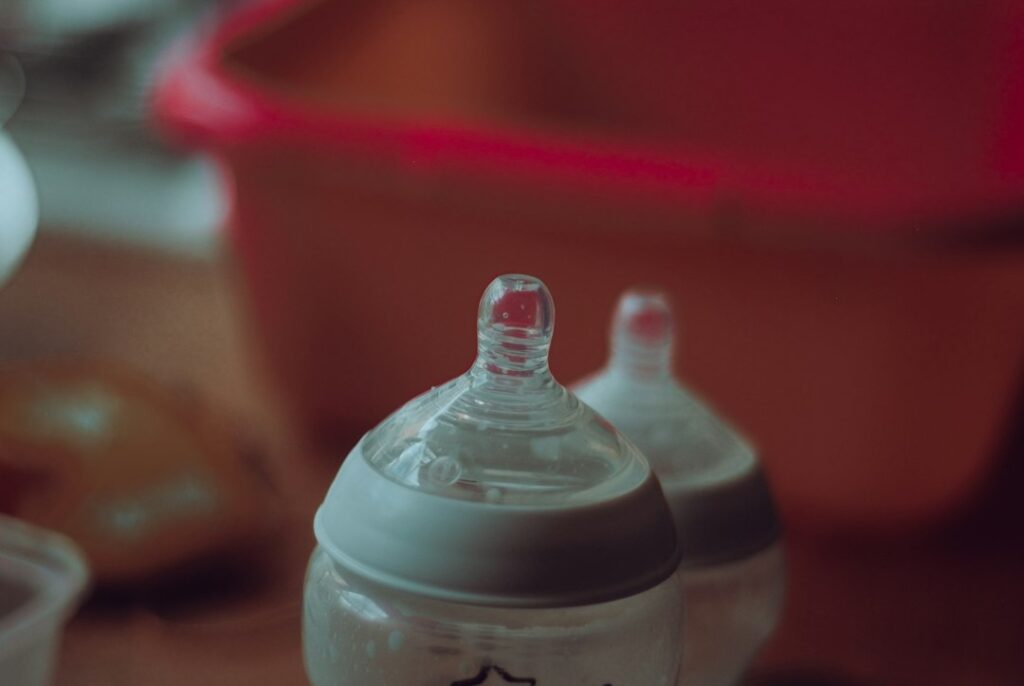
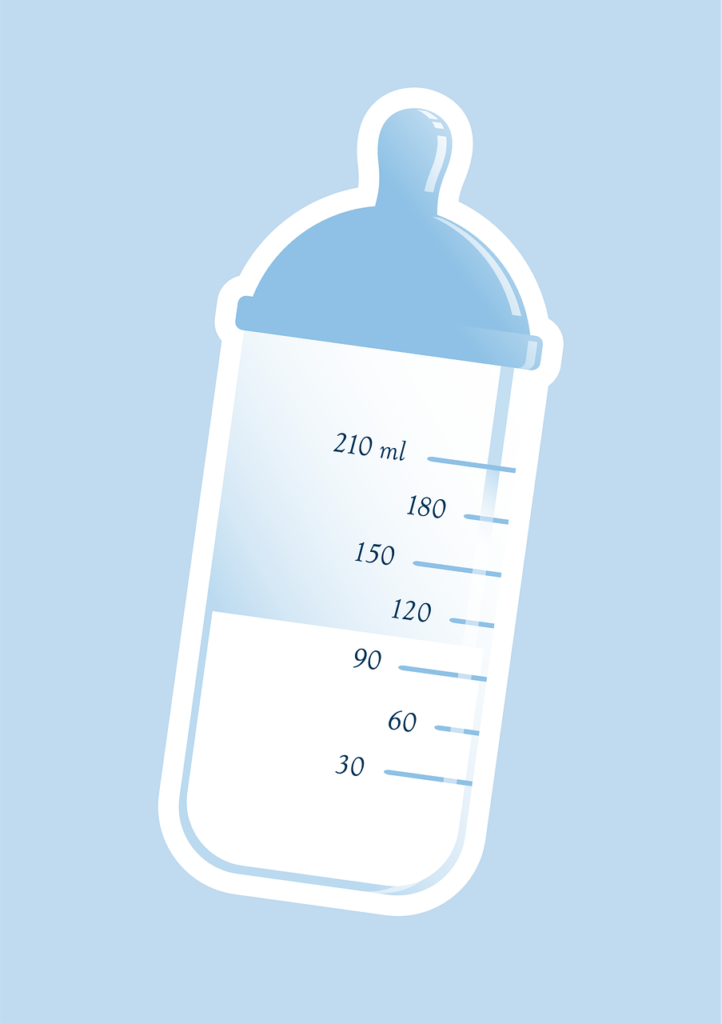
The 9-ounce Duo pairs a glass-lined interior with a plastic outer shell. It comes with a Stage 1 slow-flow nipple.
Its size and materials illustrate two choices to compare, not a reason to buy a full set before feeding preferences are clear.
Keep bottles clean and feeds organized
Wash bottles after every feed, rather than leaving milk residue for the next use. Take apart bottles, nipples, collars, caps, and valves. Scrub each piece with soap and hot water in a basin and brush reserved for feeding items, or use a dishwasher if the manufacturer permits it. Squeeze soapy water through nipple holes, rinse thoroughly, and let parts air-dry on a clean rack or unused paper towel. Store them covered once dry.
Sanitizing comes after washing; it does not replace it. The CDC recommends sanitizing feeding items at least daily for babies under 2 months, babies born prematurely, and those with weakened immune systems. For older, healthy babies, careful washing after each use may be sufficient. A dishwasher using hot water and heated drying or a sanitizing setting can do the sanitizing; boiling or steam are other options if the parts’ instructions allow them. An electric sterilizer is not an automatic purchase.
Keep prepared feeds separate from the washing area and label refrigerated bottles with the preparation time. Prepared formula should be refrigerated immediately if it will not be used right away and used within 24 hours. Once feeding begins, discard leftover formula after one hour.
Choose extras by the jobs they do
If spit-up regularly reaches clothes or furniture, absorbent cloths are worth keeping nearby; clean washcloths work as well as dedicated burp cloths. Bibs help with frequent dribbling, but feeding bibs can wait until solids begin.
For families pumping milk, the recurring tasks are collecting it, cleaning pump parts, and storing it. Correctly sized flanges, replacement valves, and enough collection bottles for the time between washes may matter more than a large accessory kit. Store milk in clean, food-grade containers or breast-milk storage bags and label it with the date. CDC guidance allows freshly expressed milk up to four hours at room temperature or four days refrigerated; parts that touch milk should be cleaned after each use.
A formula organizer can simplify packing measured powder for trips, but it does not replace safe preparation and storage. A bottle warmer is optional: milk can be served cold or at room temperature if the baby accepts it. To warm a bottle, place it in warm water—never a microwave, which can create hot spots.
Let readiness lead the move to solids
Around six months is a useful guide, not a date to circle on the calendar. According to the CDC’s guidance on starting solids, signs of readiness include steady head and neck control, sitting with support, and opening the mouth when food is offered. Breast milk or infant formula continues alongside food during this transition.
There is little reason to buy a full solids kit in advance. A small spoon, a washable bib, and a place where the baby can sit upright may be enough to begin. For seating, the signs that a high chair is safe to use matter more than the baby’s age alone; follow the chair’s instructions and use its restraint every time.
Offer soft, developmentally appropriate food while an adult stays close and watches the baby eat. Keep the baby upright rather than feeding in a reclined seat, and avoid common choking hazards such as whole grapes, nuts, and hard raw vegetable pieces.
Start with a few easy-to-clean items. Additional bowls, bibs, or food-prep tools can wait until daily meals make their usefulness clear.
Choose a seat that supports safe, manageable meals
-
Secure restraint
Use the harness as the manufacturer directs at every meal. A tray does not keep a child from sliding or climbing out.
Look forA harness that fits snugly and is easy to fastenAvoidRelying on the tray for restraint -
Stable, upright seating
Check that the seat stays steady on the intended surface and supports an upright position. A booster must be secured to an appropriate adult chair.
Look forA steady base and upright supportAvoidA wobbly seat or unsupported recline -
Practical cleanup
Smooth surfaces and removable parts can shorten cleanup. Crevices matter most when food repeatedly collects where hands cannot easily reach.
Look forAccessible surfaces and clear cleaning instructionsAvoidHard-to-reach food traps -
Fit at the table
Foot support may improve comfort as a child grows. Measure the chair’s open footprint and storage space before buying a folding model.
Look forUseful foot support and a workable footprintAvoidA chair that blocks daily movement

The listing describes a five-point harness, adjustable footrest, and detachable tray. Those features address restraint, support, and cleanup.
Check the manual for each seating stage and its limits. Confirm that the chair fits the dining area with its legs fully open.
Keep first meals simple
Early meals need little tableware. A few soft-tipped spoons, one small cup, a bib, and a washable bowl or plate are enough to start. Having a spare spoon helps when one lands on the floor; dishes with few crevices make cleanup easier.
A small open cup lets a baby practice sipping with help, while a straw cup may suit some families. The CDC advises introducing a cup around 6 months, when solids typically begin. A washable bib protects clothing; a pocketed bib can catch some spills but is optional.
A placemat helps when food is served directly on a table or tray, especially if the surface is difficult to wipe. A suction bowl can reduce sliding on a smooth, clean surface, though it will not stop a determined baby from lifting it. Neither is essential for the first tastes.
Tableware does not make food safe to eat. Texture, size, and preparation still matter: the CDC recommends modifying foods to reduce choking risk and supervising meals closely.
Prepare food with tools already at hand
A fork can mash soft-cooked food, and a regular blender can purée larger batches. A dedicated baby-food appliance is optional; it mainly combines preparation tasks in one machine. The important choice is the texture served, not the tool used to make it. As eating skills develop, babies can move beyond smooth purées to appropriately prepared mashed foods and soft pieces. The CDC’s choking-hazard guidance explains how to prepare foods safely.
Small, washable containers work for leftovers. Lidded freezer trays offer another way to portion food, but they are a convenience rather than a starter essential. Before making a large batch, check FoodSafety.gov’s cold-storage guidance for handling and storage times. Label portions with their preparation date so older food is used first.
Ten 2-ounce wells provide a way to freeze small portions of prepared food.

Buy for the next feeding stage
-
Start with the milk-feeding routine
Choose bottles and related supplies for the feeding plan in use, not every possible plan. A small starter set leaves room to adjust once daily needs become clearer.
-
Check the washing routine
Count what can be washed and dried between feeds before adding more bottles or pump parts. Limited drying space may matter as much as the number of feeds.
-
Add solids supplies when meals approach
Check for a safe, upright seat first. A spoon, an easy-to-clean bib, and kitchen tools already on hand may cover early meals.
-
Buy extras to solve a known problem
Look through supplies already at home and measure available storage. Add a warmer, freezer trays, or extra tableware only when the current routine gives them a clear job.
A useful feeding setup does not need to anticipate every stage. Start with the current routine, then add supplies when the next stage—or a recurring inconvenience—makes their purpose clear.