Kate Donovan

A first home rarely needs every appliance on day one.
Moving boxes can land beside an empty refrigerator alcove, unfamiliar outlets, and cabinets with barely enough room for plates. Before ordering, check what remains, measure the route indoors, and confirm power, water, drainage, and dryer venting.
With a limited budget, daily routines decide what comes first. Food storage may be urgent; laundry can wait if facilities are nearby. Buy for the home as it exists, not an imagined setup.


What counts as essential?
Daily-function equipment
Handles frequent needs such as preserving food, cooking, laundry, and routine cleaning.
Convenience upgrades
Save time or effort but have workable manual, shared, or multipurpose alternatives.
Built-in systems
Includes installed heating, cooling, ventilation, and water-heating equipment. Check what the property already provides before shopping.
Safety devices
Smoke and carbon-monoxide alarms protect occupants; they are essential safety equipment, not optional appliances.
List the tasks that cannot wait after move-in, then choose the simplest equipment that covers them. Add convenience upgrades only after household routines become clear.
Verify fit, access, and daily practicality
-
Check the inventory and household
Confirm which appliances remain. Size needs around occupants, cooking and laundry habits, pet care, and accessibility—not room size alone.
-
Measure the appliance, niche, and route
Check packaged dimensions against doors, halls, stairs, lifts, corners, and thresholds; record the narrowest point.
-
Verify utilities, drainage, and ventilation
Match voltage, plug, gas, water, and drain positions. Keep the manufacturer’s required airflow and hose clearances.
-
Allow working clearance
Map doors, drawers, and lids against walls, cabinets, walkways, and neighboring appliances. Reserve storage for accessories and supplies.
-
Check everyday usability
Assess controls, handles, loading height, reach, and display readability. Consider noise near bedrooms, workspaces, children, and sensitive pets.
-
Confirm installation rules
Check floor strength and level, fixing requirements, permitted locations, maintenance access, and whether a qualified installer is mandatory.
Confirm who disconnects old units, removes packaging, fits connections, and takes appliances away before booking. Landlord or building approval may also be needed.
Buy according to what cannot wait
Build around cold storage and safe cooking
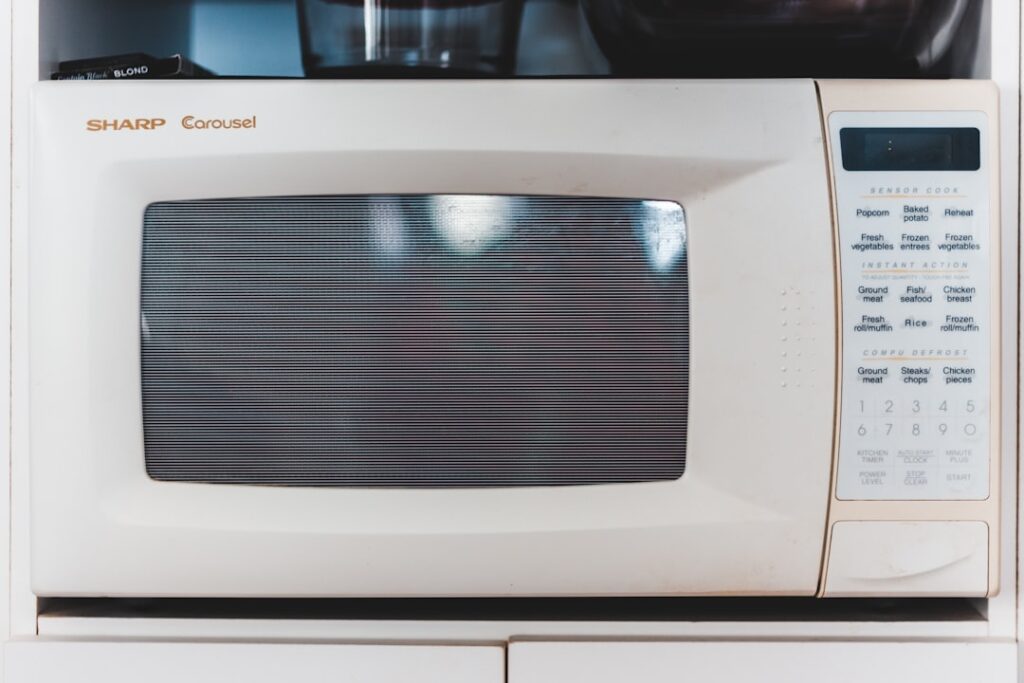
When neither appliance is supplied, refrigeration comes first, followed by one dependable cooking method. A microwave is broadly practical; a portable induction hob suits more varied cooking if the circuit, ventilation, and cookware are appropriate. High-draw appliances should plug directly into a suitable wall outlet, not an extension lead.
An existing refrigerator deserves a proper test before replacement. Confirm the temperature setting, clean dusty coils where accessible, inspect door seals, and allow several hours for temperatures to stabilize. If performance remains poor, review common causes of inadequate cooling before assuming the whole appliance has failed.
For a new refrigerator, measure the doorway, installation space, ventilation gaps, and door swing. Favor usable shelf space, an efficient rating, tolerable operating noise, replaceable parts, and local service support over screens or novelty dispensers. Capacity should reflect actual shopping habits rather than the largest cabinet that fits.
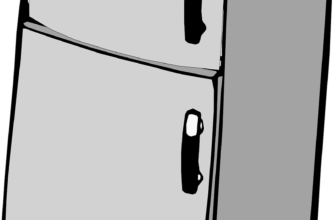
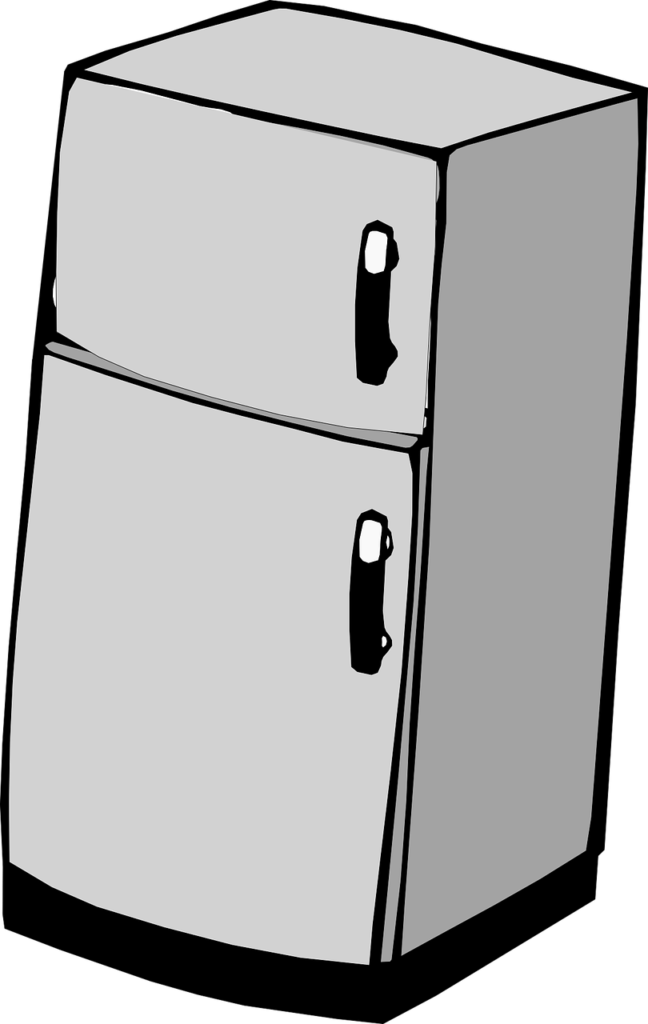
Compact two-door option for smaller kitchens
This 7.5 cu. ft. model measures about 21.5 inches wide and includes a separate freezer, removable glass shelves, a clear crisper, door storage, interior lighting, and an adjustable thermostat. Its narrow footprint is useful where full-size refrigeration would crowd the room; confirm ventilation clearance and service availability before ordering.
Make countertop space earn its keep
Countertop appliances should justify both their purchase and the space they occupy. Before buying, track a normal week of cooking: an appliance used for several breakfasts, reheated lunches, or quick dinners has a stronger case than one reserved for occasional recipes.
Check four practical points:
- Weekly use: Count realistic tasks, not hoped-for habits.
- Footprint: Include door swing, ventilation clearance, and storage for accessories.
- Cleaning: Removable, dishwasher-safe parts are easier to live with than awkward heating chambers.
- Overlap: Avoid paying for functions already handled well by the oven, hob, or microwave.
For households debating crisping and baking options, an air fryer and toaster oven comparison can clarify which cooking style fits regular meals.
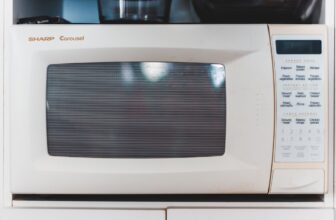
In a compact kitchen, one capable combination appliance may be more practical than several single-purpose machines. BLACK+DECKER’s 0.9-cu.-ft., 900-watt model combines microwave, air-fry, convection/grill, bake, and roast modes. It suits households that regularly reheat food and crisp frozen items, though accessories still require cleaning and its cavity remains relatively compact.
Plan laundry and dishwashing around real demand
Laundry equipment is urgent only when hookups are ready and laundromats or pickup services are impractical. Otherwise, delaying the purchase creates time to confirm the room, vent route, and real weekly load.
Match washer capacity to the largest routine load, not an occasional bulky item. In tight rooms, stacking saves floor space, but controls must remain reachable. Compare full cycle times, since compact machines may handle less laundry or dry more slowly.
Vented dryers usually finish faster but require a compliant exhaust path; ventless models simplify placement while often take longer. Shutoff valves, braided supply hoses, drain-pan planning, and leak detection help limit water damage.
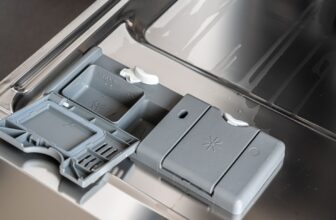
Dishwashers are easiest to justify when daily dishes regularly crowd the sink. Confirm opening dimensions, then inspect rack spacing with actual plates, filter access, cycle noise, and whether a quick cycle suits the household. Careful leveling, secure connections, and a high drain loop matter as much as the machine itself.
Compact stackable laundry pair
The washer and vented dryer stack vertically and both use 110V power, making the pair relevant to compact laundry rooms with suitable venting. The washer is rated at 1.62 cubic feet/15 pounds and includes four memory programs plus a pet cycle; the 3.5-cubic-foot dryer can run simultaneously. Confirm vent clearance and whether the compact capacity fits normal loads.
Keep floors and air manageable
A vacuum should fit the floor plan, not win a power contest. Uprights suit broad carpeted areas, while canisters often handle hard floors, rugs, and edges more easily. For stairs, check carrying weight and hose reach; for pets, prioritize a brush roll that resists tangles and tools that lift hair from upholstery.
Storage and routine matter just as much. A compact vacuum suited to limited storage may be more practical than a bulky model. Cordless machines simplify quick cleanups but require charging and provide limited runtime; corded models trade convenience for uninterrupted use.
Air-care appliances make sense when they address a specific issue:
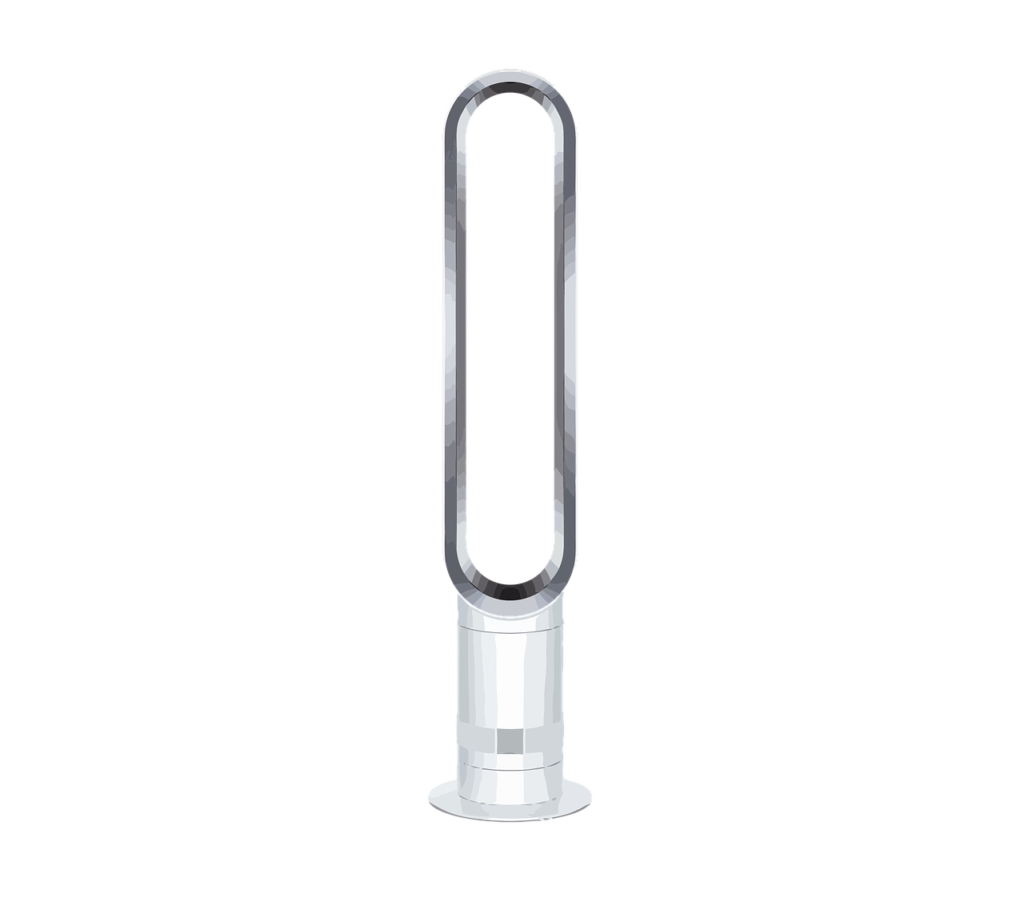
- Allergies or pet dander: Match purifier capacity to the room, not the entire home. A sealed unit with suitable filtration is preferable; these large-room options for pet allergies offer a useful starting point.
- Excess moisture: Confirm the problem with a hygrometer before choosing a dehumidifier.
- Dry air: Use a humidifier only where needed and clean it frequently.
- Poor ventilation: Improve extraction and remove pollutant sources first; a purifier cannot correct damp, mold, or inadequate airflow.

Judge the cost beyond checkout
-
Running costs
Energy, water, filters, bags, detergent, and descaler can outweigh a small saving upfront.
Look forEfficient operation and affordable consumablesAvoidCheap appliances with costly proprietary supplies -
Installation
Delivery may exclude hoses, venting, electrical work, stacking kits, or old-appliance removal.
Look forA complete installed-cost estimateAvoidTreating delivery as full installation -
Repairability
Common parts, accessible filters, local technicians, and clear service information help extend useful life.
Look forAvailable parts and practical service accessAvoidSealed designs with uncertain support -
Buying route
New offers predictable cover; open-box needs inspection, refurbished needs a reputable warranty, and used needs testing.
Look forCondition evidence and written return termsAvoidUntested bargains with missing parts
Add expected utilities, installation materials, routine consumables, and basic maintenance. Keep model and serial details so compatible parts and service information remain easier to find.
Turn the plan into purchases
-
Inventory and test what is included
Record each appliance’s model and condition, then run a normal cycle. Troubleshoot poor dishwasher cleaning before assuming replacement is necessary.
-
Verify every installation point
Measure openings, access routes, clearances, outlets, ventilation, and water or gas connections.
-
Investigate existing faults
Check leaks, unusual noise, damaged cords, and odors. A musty washing machine may need cleaning rather than replacing.
-
Rank the remaining gaps
Handle safety, refrigeration, and essential cooking first; place convenience upgrades lower.
-
Purchase one tier at a time
Install and use priority appliances before adding the next group. This exposes overlooked needs and prevents duplicate functions.
Save manuals, model and serial numbers, receipts, warranty dates, filter sizes, and installer details together. Add calendar reminders for filter changes, descaling, cleaning cycles, and safety checks.
A first home does not need every appliance at once. Start with safe, dependable tools for immediate routines, then add equipment only when repeated needs justify the space and upkeep.
If a microwave arcs or flashes, stop using it, unplug it when safe, and follow guidance on microwave sparking and shutdown rather than testing it again. Safety comes before convenience.