Kate Donovan
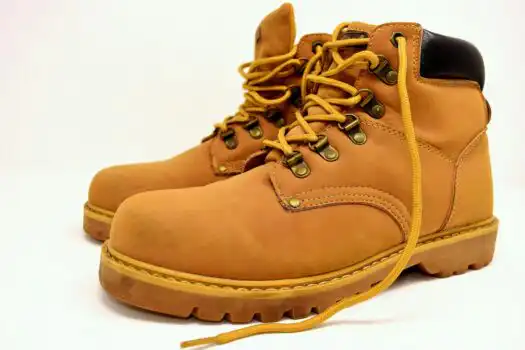
A “wide” label means little if the boot’s shape puts pressure in the wrong places.
Halfway down a steep trail, a boot that felt comfortable in the shop can turn punishing: toes slide forward, strike the front, and bunch together as the foot swells. Extra space around the heel or ankle does not solve a cramped forefoot—and may create rubbing instead.
The better fit combines a foot-shaped toe box with a snug midfoot and secure heel. Toes should spread naturally under load and still wiggle when standing downhill, while the heel should lift only slightly during a firm uphill step. Since brands use different lasts, a wide size is best treated as a starting point rather than proof of a good fit.
Five starting points—not one universal fit


Selections were based on practical fit signals rather than laboratory measurements. Published sizing details, construction, recurring owner feedback, and light hands-on familiarity helped distinguish genuinely roomy designs from boots that simply run large.
Priority went to wide options and visibly generous toe boxes that still offer useful lacing control through the midfoot. Reports of heel lift or pressure at the little toe were treated as important cautions.
Waterproofing, outsole tread, ankle support, and upper durability were considered alongside width. A roomy boot still needs enough structure and grip for its intended terrain.
Foot volume, arch shape, sock thickness, and swelling can change the result. A favorable return policy is essential; boots should be tried indoors with hiking socks, checking toe clearance on a slope and heel movement before outdoor wear.
Width labels are only a starting point: sizing can vary by model, gender-specific last, and production update.
Find the Source of Forefoot Pinching
-
Match the Right Dimension
Overall width affects the entire forefoot, while an anatomical toe box follows the natural toe spread. Vertical volume is different again: pressure across toe joints or the top of the foot often signals insufficient depth rather than insufficient width.
Look forSpace to spread and lift the toes without the foot sliding sideways.AvoidSizing up in length to solve width or depth pressure. -
Secure the Heel Without Crushing the Forefoot
A roomy front only works when the heel and midfoot stay controlled. Lock-lacing at the ankle can reduce heel lift while leaving the lower eyelets slightly relaxed over sensitive areas.
Look forA snug heel pocket, stable midfoot, and independently adjustable lacing.AvoidOvertightening the forefoot to compensate for a loose heel. -
Check Insoles and Flex
Thick or highly contoured insoles consume valuable internal volume; a thinner replacement may ease top-of-foot pressure. The boot should also flex near the toe joints, since a stiff mismatch can rub even when static fit feels roomy.
Look forRemovable insoles and flex aligned with the ball of the foot.AvoidAggressive arch shapes or a flex point that fights the stride. -
Allow for Socks and Waterproof Linings
Fit should be checked with the intended hiking socks, not thin everyday pairs. Waterproof membranes add useful wet-weather protection but can reduce breathability and make the interior feel warmer and slightly less forgiving; understanding waterproof ratings and construction helps clarify that tradeoff.
Look forEnough volume for hiking socks without numbness or seam pressure.AvoidJudging fit barefoot or assuming waterproof always means more comfortable.
Merrell Moab 3 Mid Waterproof: The dependable all-rounder
01
Best for dependable comfort on varied trails
The Moab 3 Mid Waterproof is a familiar, approachable choice for day hikes, damp paths, and moderate terrain. Its wide sizing accommodates broader feet without departing too far from the supportive feel of a traditional hiking boot.
It suits hikers seeking one versatile pair rather than a specialized boot for technical routes or unusually foot-shaped footwear.
- Wide sizing eases forefoot pressure
- Cushioned midsole feels forgiving
- Vibram outsole provides dependable grip
- Waterproof membrane handles wet trails
- Mid-height build adds ankle support
- Toe box is not especially anatomical
- Waterproof construction can run warm
- Heavier than trail shoes
Quick take A balanced boot with conventional support, cushioning, and weather protection. The wide version adds useful room, though naturally shaped feet may still want more toe splay.
The Moab 3 Mid Waterproof is the safest all-around starting point for broader feet tackling everyday trails. It combines a comfortable wide fit with stable cushioning, capable traction, and practical wet-weather coverage, but its toe box remains more conventional than truly anatomical.
KEEN Targhee III Mid: Roomy protection for less
Top choice for KEEN’s naturally wider footwear fit
The Targhee III Mid Waterproof is a practical trail boot for hikers seeking extra forefoot volume without giving up a substantial toe bumper. Its waterproof leather construction and traditional KEEN shape suit day hikes and mixed terrain, while the broad front can feel less restrictive as feet swell.
That space only helps when the rest of the boot fits securely. Overall size should leave toe clearance without allowing the heel to lift; narrower heels may need careful lacing, thicker socks, or a different last.
- Generous forefoot volume
- Substantial toe protection
- Waterproof leather upper
- Strong overall value
- Heel hold may vary
- Not especially lightweight
- Sizing needs careful checking
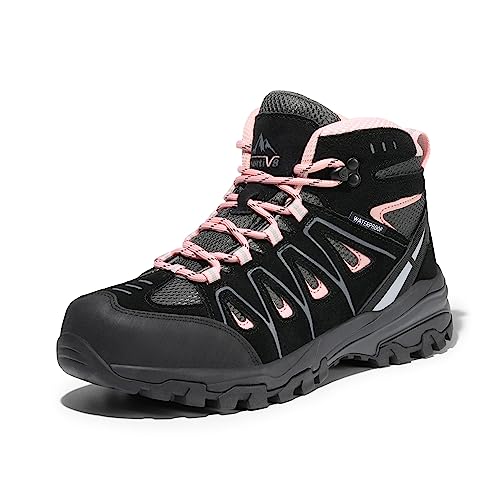
NORTIV 8 Women’s Waterproof Boots: An accessible occasional-hike option
Affordable option with a looser wide toe box
The NORTIV 8 Seeker occupies a practical middle ground between a trail boot and an everyday rain-ready walker. Its lighter build makes sense for occasional hikes, camping trips, and travel, especially when one pair needs to cover damp paths and daily sightseeing.
A wide-toe-box version is offered, but the listing’s available widths should be checked carefully rather than treating every size as wide. This is a value-focused boot, best approached with realistic expectations about long-term use and fit precision.
- Accessible entry-level option
- Wide-toe-box version offered
- Lightweight for travel
- Waterproof construction for wet outings
- Traction-focused rubber outsole
- Width availability may vary
- Fit consistency can differ
- Heel hold lacks refinement
- Durability may trail premium boots
Timberland Flume Mid: Traditional leather structure
Rugged leather boot with dependable waterproof protection
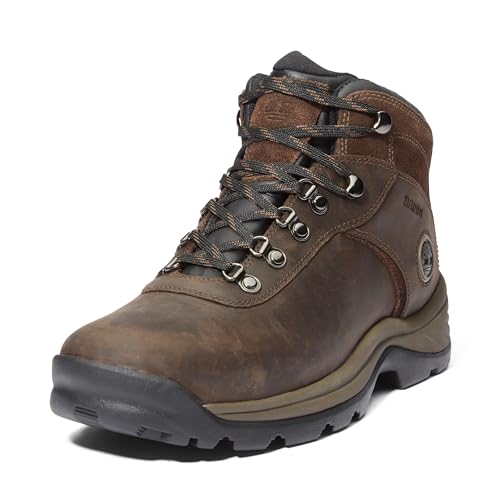
The Timberland Flume Mid Waterproof suits hikers who prefer a firm, work-boot-influenced feel over a soft, athletic-style hiker. Its leather upper, mid-cut profile, and conventional shape make it a natural match for day hikes, rough paths, and everyday outdoor wear.
The wide option is the sensible starting point for broader feet. Still, the forefoot should feel adequately wide and deep during the first fitting; break-in may soften the leather, but it will not create meaningful toe space.
- Supportive leather construction
- Seam-sealed waterproof design
- Lugged solid-rubber outsole
- Wide sizing available
- Heavier than fabric hikers
- Leather may need break-in
- Toe shape is not anatomical
NORTIV 8 Wide Toe Box: Built for natural toe splay
Low-drop design focused on extra toe room
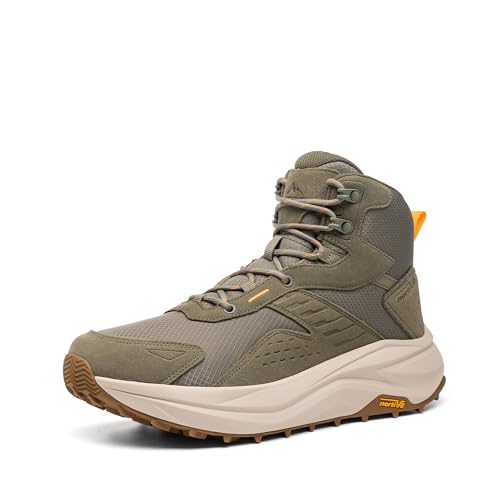
This low-drop NORTIV 8 is the clearest fit for feet that fan out toward the toes, including those sensitive around bunions. Its shape creates forefoot space without adding unnecessary length.
Sizing up in a narrower boot is a poor substitute: excess length can misalign the flex point and encourage heel movement while the toe-box shape remains restrictive. Starting with the measured length and checking width, lacing tension, and heel hold gives a more useful fit assessment.
- Broad toe box accommodates natural splay
- Shape may ease pressure near bunions
- Waterproof construction for damp conditions
- Low-drop platform encourages a flatter stance
- Narrow midfeet may require careful lacing
- Heel security needs an indoor check
- Low drop may require gradual adaptation
Quick take A purpose-shaped option for hikers whose feet are widest at the toes. Those with slim midfeet should test lace lockdown and heel lift before committing.
Run a 15-minute indoor fit test
-
Match real hiking conditions
Wear the usual hiking socks and any preferred insoles. Lace both boots firmly, without cranking down the forefoot.
-
Check standing toe space
Stand with full weight on both feet and spread the toes. Side pressure, overlap, tingling, or restricted movement indicates a poor shape match.
-
Simulate a descent
Walk down stairs or stand on a sloped board, keeping a hand near a rail. Toes should not strike the front during repeated steps.
-
Test heel hold
Climb stairs and walk briskly around the room. Slight movement may settle with lacing, but repeated heel lift can lead to friction and blisters.
-
Wait for delayed pressure
Keep the boots on for 10–15 minutes. Numbness, burning, or growing pressure often reveals low toe-box volume that a quick try-on misses.
Test only on clean indoor surfaces so the boots remain returnable.
Leather and padding may soften, and a thinner insole or adjusted lacing can fine-tune volume. But obvious forefoot squeezing, toe contact, or numbness means the size or last shape is wrong. Waterproof boots are especially unlikely to gain meaningful toe-box room.
For a reliably wide all-round fit, Merrell Moab 3 Mid is the safest starting point. For a fan-shaped forefoot or bunions, NORTIV 8 Men’s Wide Toe Box allows more natural splay. KEEN Targhee III Mid is the better value choice when toe protection and traditional support matter. Occasional women’s hikers can consider NORTIV 8 Women’s when affordability outweighs long-term durability.
Before ordering, check the return window and indoor-wear rules. Test boots late in the day with hiking socks and usual insoles; reject toe contact, numbness, or persistent heel lift. Once indoor fit is sound, take a short, easy shakedown walk before adding mileage. Boots are only part of readiness, so review a practical hiking essentials checklist covering water, layers, navigation, and first aid.