Kate Donovan
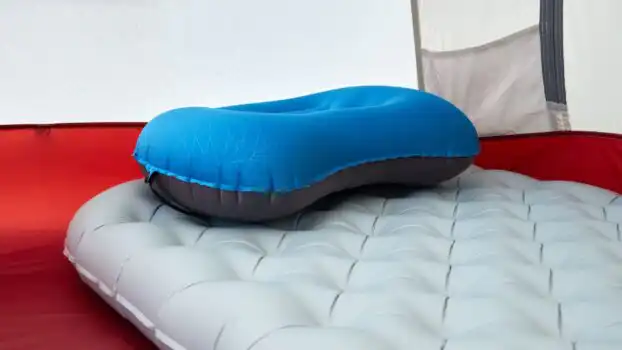
Extra loft looks reassuring, but thickness alone is no promise of pressure relief.
At 2 a.m., a pad that felt plush at bedtime can leave a hip nearly touching the ground, a shoulder numb, and sleep broken by constant turning. Side sleeping concentrates body weight into small contact areas, so support and pressure distribution matter as much as cushioning.
A very soft pad may collapse beneath the hips; an overinflated one can push sharply against the shoulder. Firmness should leave enough give for those areas to sink without bottoming out. Cold ground can also change comfort—by drawing away heat or making some foams feel firmer—while roots, uneven soil, and pad inflation further affect support.
Quick picks for different sleeping setups


Why side sleepers need more than thickness
Side sleeping places much of the body’s weight onto two relatively small contact areas: the shoulder and hip. That concentrated load compresses foam more deeply and pushes air away from those points, increasing the chance of touching the ground through the pad. On an air pad, displaced air may also create firmer bulges elsewhere or leave the body feeling unstable.
Cushioning is not the same as support
Cushioning softens contact and spreads pressure around sensitive joints. Plush foam and taller air chambers can help, but thickness alone does not prevent bottoming out.
Support keeps the shoulder and hip from sinking so far that the spine bends awkwardly or the ground becomes noticeable. A useful side-sleeper pad balances both qualities: enough give to cradle prominent areas, with enough resistance to maintain clearance and alignment.
Comfort remains highly individual. Body shape and weight affect how deeply a pad compresses, while existing shoulder or hip pain can make small pressure differences obvious. Inflation level matters too: overly firm pads may feel harsh, but overly soft pads can collapse under the hip. Uneven, rocky, or sloping terrain further changes how weight is distributed, so modest inflation adjustments can matter as much as listed thickness.
What matters most for painful pressure points
-
Pressure relief
Shoulders and hips need enough cushioning to sink without reaching the ground or a hard internal layer.
Look forControlled sink with stable supportAvoidThickness without load-bearing support -
Warmth and usable size
The pad should insulate for expected temperatures and leave room to turn without slipping off.
Look forSuitable R-value, width, and lengthAvoidUnverified warmth or cramped dimensions -
Transport burden
Packed size and weight matter mainly when the pad must be carried beyond the campsite.
Look forA realistic packed format for the tripAvoidUltralight compromises that undermine comfort -
Setup and upkeep
Valves, inflation effort, foam recovery, and repairability affect repeated use.
Look forSimple setup and maintainable materialsAvoidFussy systems with unclear repair options
Car camping favors thick foam, generous width, and minimal concern about bulk. Backpacking rewards low weight and compact packing, usually with less plush cushioning. The compromise resembles choosing between down and synthetic sleeping bags: the best material or design depends on moisture, distance, storage space, and the consequences of extra weight.
Pads are assessed for likely side-sleeper comfort rather than thickness alone, with evidence weighted by how directly it can be verified.
-
Shoulder-and-hip relief
Construction, firmness, thickness, and bottoming-out risk indicate whether concentrated loads are likely to be cushioned.
-
Observable details
Dimensions, packed form, valve design, surface texture, and foam behavior receive more weight when clearly shown or consistently documented.
-
Claims kept separate
Manufacturer R-values, weights, materials, and comfort language are identified as stated specifications unless independently demonstrated.
Individual comfort still varies with body weight, sleep position, inflation level, and ground conditions.
CYMULA Memory Foam Pad: Deep Cushioning for Sensitive Hips and Shoulders
01
Best for cushioned pressure-point relief
The CYMULA is closer to a compact floor mattress than a backpacking pad. Its three-inch memory-foam layer contours around prominent shoulders and hips, making it especially appealing when direct pressure causes side-sleeping discomfort.
At 72 by 24 inches, it fits adult sleepers without demanding tent-mattress space. The dense, settled feel suits car camping, sleepovers, guest rooms, and short carries from vehicle to campsite.
- Contours around shoulders and hips
- Stable, non-bouncy surface
- Three-inch cushioning
- Includes travel bag
- Bulky when rolled
- Heavy at 7.5 pounds
- Foam recovers slowly when cold
- Too large for backpacking
Quick take This pad prioritizes body-conforming comfort over packability. It feels steadier than many air pads, but requires considerably more storage and carrying effort.
For side sleepers focused on pressure relief, the CYMULA is the strongest all-around choice here. Its foam cushions the shoulder and hip without the shifting or bounce associated with inflatable pads. The tradeoff is substantial bulk, and cold conditions may leave the foam feeling firmer and slower to expand.
CYMULA Three-Inch Pad: Affordable Foam Comfort
A softer option for car camping and guests
The CYMULA is a roll-up memory foam mat intended for car camps, cots, truck beds, and occasional guest use. Its three-inch profile combines softer memory foam with a denser base layer, creating a familiar mattress-like surface for side sleepers who prioritize cushioning over packability. A removable cover and non-slip waterproof bottom suit practical, close-to-the-car setups.
- Three inches of cushioning
- Supportive dual-foam construction
- Removable cover simplifies cleaning
- Non-slip waterproof bottom
- May compress under heavier sleepers
- Bulky when rolled
- Impractical for backpacking
- Less adjustable than air pads
TREKOLOGY UL R7: Deep Air Cushioning for Cold Ground
Best for thick, insulated all-season cushioning
The TREKOLOGY UL R7 is a four-inch rectangular air pad intended for side sleepers who need substantial clearance beneath the shoulders and hips without giving up cold-ground insulation. It suits camps where packed size matters more than the settled, quiet feel of foam.
Inflation is the critical adjustment. The pad should first be filled enough to prevent bottoming out, then softened with small releases of air until the surface contours around pressure points. Fully inflating it can make the pad feel rigid, pushing back against sore hips rather than cradling them.
- Four-inch air chamber leaves generous room for hip and shoulder sink
- Claimed 7.2 R-value targets colder ground conditions
- Air pressure can be tuned for softer contouring
- Carry bag is included
- High air volume may feel bouncy when changing positions
- Movement can produce more noise than foam
- Overinflation creates a hard, rounded sleeping surface
- Air construction remains exposed to punctures and slow leaks
Elegear CumbreX: Foam Stability With Tunable Firmness
Pressure-distributing foam with quick self-inflation
The Elegear CumbreX bridges the gap between a fixed foam mattress and a fully air-supported pad. Its 3.15-inch profile uses 26D memory foam inside an inflatable shell, giving shoulders and hips a broad, steady surface while allowing firmness adjustments.
Opening the valve starts the expansion; after the foam rebounds, extra air can be added or released to fine-tune support. This format is best suited to car camping, tent sites near parking, and occasional guest use rather than weight-conscious backpacking.
- Minimal pumping after expansion
- Firmness remains adjustable
- Foam distributes concentrated pressure
- Pillow built into pad
- Bulkier than air-only pads
- Cold or prolonged compression may slow expansion
- Foam requires careful protection from condensation and damp gear
- Drying takes longer than an empty air pad
Naturehike Ultralight Sidewall Pad: Compact Clearance for the Trail
A lightweight design that helps limit nighttime roll-off
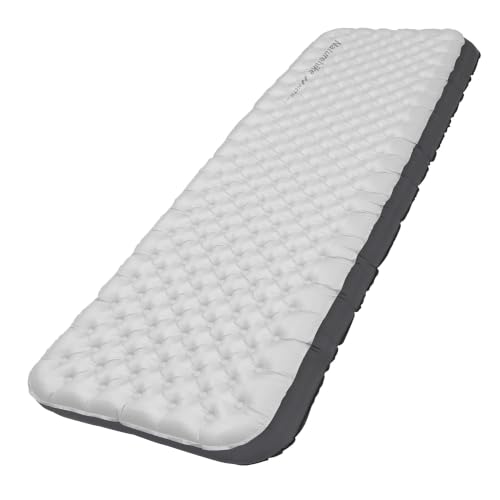
The Naturehike is an insulated inflatable aimed at side sleepers who need shoulder-and-hip clearance without strapping bulky foam to a pack. Its trail-oriented design makes particular sense when paired with backpack adjustments that reduce hiking pain, since a lighter sleep system cannot compensate for poor load fit.
- 10cm air depth leaves useful clearance beneath shoulders and hips
- Raised sidewalls help keep sleepers centered through position changes
- Firmness can be tuned by releasing small amounts of air
- Claimed 6.5 R-value suits cooler ground conditions
- Packs smaller than thick foam alternatives
- Narrower sleeping space can restrict sprawled positions
- Air chambers feel less planted than dense foam
- Punctures remain a backcountry vulnerability
- Overinflation may worsen pressure at hips and shoulders
For maximum contouring around sore hips and shoulders, the CYMULA Memory Foam Camping Mattress Pad is the strongest car-camping choice; the CYMULA Three-Inch Pad offers similar foam comfort when value matters more. For cold ground, the TREKOLOGY UL R7 combines deep air cushioning with substantial insulation. The Elegear CumbreX is the balanced option for campers wanting foam-assisted stability and adjustable firmness without committing to a full foam mattress.
When packed size is the deciding factor, the Naturehike Ultralight Sidewall Pad is the practical backpacking pick, though it gives up some foam-like contouring. Once selected, the pad should sit alongside shelter, bedding, and repair supplies on a complete camping gear checklist.
Check the usable width and return terms before removing tags or taking the pad outdoors. Inflate it at home, then lie on each side for several minutes in normal sleepwear. The shoulder and hip should remain off the floor without requiring rock-hard pressure. If either area bottoms out—or the body drifts toward an edge—adjust inflation and repeat the test. Persistent contact usually signals insufficient depth, width, or support.