Kate Donovan
The real test begins after the forecast stops being accurate.
At 2 a.m., rain rattles the fly, a gust presses the wall inward, and pegs begin loosening in saturated ground. A roomy fair-weather shelter can suddenly feel one hard blast away from collapse.
Storm resistance is equal parts design and pitch. Pole geometry, fly coverage, seam protection, guy points, and floor construction matter, but so do site choice, wind orientation, suitable stakes, and properly tensioned lines. Every advantage carries a compromise: low profiles often sacrifice headroom, instant tents trade stability for speed, and family shelters expose more fabric to gusts. Stronger structures also tend to add packed weight, bulk, or cost.
Match the Shelter to the Trip



What Matters Once the Weather Turns
Published specifications were treated as a starting point, then weighed against features that affect the complete shelter when correctly pitched.
Waterproof-fabric claims mattered less without sealed seams, a protective fly, a raised floor, and entryways that limit drips inside.
Lower profiles, sensible pole geometry, usable guylines, and adequate staking points were favored. Tall cabin walls require especially secure anchoring.
Pitching speed, fly attachment, stake quality, ventilation, and the ease of retensioning lines helped distinguish practical storm use from specifications alone.
These judgments reflect design, documented features, and normal pitching—not controlled wind-tunnel or prolonged storm testing.
Gazelle T4: A Storm-Ready Basecamp for Car Camping
01
Top choice for fast setup and spacious camping
The Gazelle T4 suits car campers who want a shelter that feels substantial without spending long minutes assembling poles in worsening weather. Its preassembled hub frame deploys in about 90 seconds, while the 94-by-94-inch floor and 78-inch peak height provide more livable room than many low-profile storm tents.
This is primarily a drive-up campsite shelter, not a portable option for long carries. The packed hub structure is bulky, but that trade gives groups a roomy basecamp with straightforward setup.
- Fast hub-style deployment
- 2000mm water-resistance rating
- Rainfly adds weather coverage
- Over 61 square feet inside
- Removable floor aids cleanup
- Bulky for transport
- Tall walls catch more wind
- Needs careful pre-storm anchoring
- Not intended for winter
Quick take The T4 combines quick deployment with standing room and credible wet-weather features. Its height and broad footprint make firm staking, taut guylines, and a sheltered pitch especially important before wind arrives.
The Gazelle T4 is the strongest all-around option for storm-conscious car camping when interior space and rapid setup matter more than packed size. The rainfly, 2000mm water-resistance rating, and removable floor support wet-weather use, but the tall, spacious shape must be secured before conditions deteriorate—it should not be treated as windproof simply because the frame feels sturdy.
Forceatt Two-Person: A Compact Budget Shelter
Best for affordable three-to-four-season backpacking
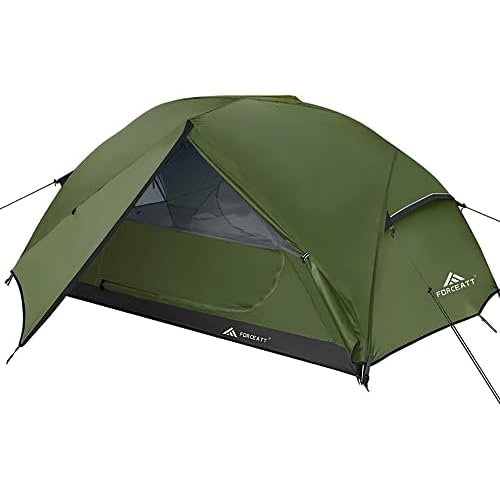
The Forceatt is a lower-cost backpacking shelter for solo campers wanting extra room or pairs comfortable with close quarters. Its 88.6-by-53.1-inch floor and 43.3-inch peak create a relatively small wind-facing profile, while two doors and vestibules help keep packs from occupying sleeping space.
At 5.5 pounds, it suits shared loads and short approaches better than ultralight mileage. Once rain forces boots, jackets, and damp layers under cover, the two-person interior can feel tight despite the vestibules.
The advertised 3000mm fabric rating is useful context, but it does not predict the whole tent’s performance. Even understanding what a 20,000mm waterproof rating means cannot reveal how well seams, zipper covers, fly edges, pole connections, guylines, and stakes handle driven rain. Careful pitching and solid anchor placement remain essential, especially as wet ground loosens.
- Compact profile limits exposed area
- Two doors and vestibules
- Aluminum pole construction
- Accessible budget positioning
- Interior tight with wet gear
- Heavy for an ultralight pair
- Performance depends on careful pitching
Alpha C4: Quick Cover When Rain Is Closing In
Quick shelter with a convenient removable rainfly
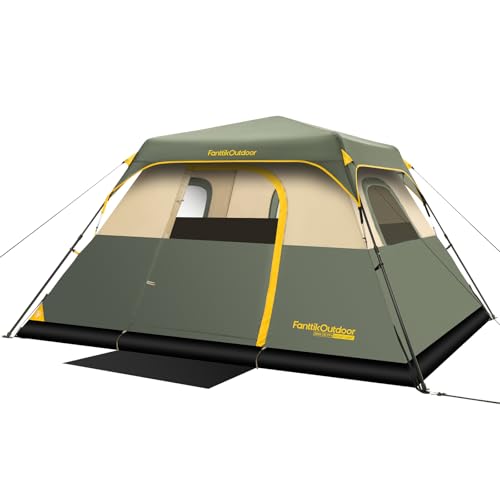
The FanttikOutdoor Alpha C4 is a four-person instant cabin tent aimed at car campers who value a short setup window. Its pop-up X-frame and integrated eave poles are designed to deploy in about 60 seconds, helping get the main shelter overhead before an approaching shower arrives. A removable rainfly completes the three-season setup.
Instant deployment does not make storm preparation automatic. Each frame joint still needs to lock fully, and the tent should be oriented to keep its least exposed side toward the prevailing wind. Even fly tension helps prevent loose fabric from collecting water or flapping excessively. Stakes and guylines matter just as much—particularly as rain softens the ground and reduces holding power.
- Fast instant-frame deployment
- Four-person cabin layout
- Removable rainfly
- Numerous mesh windows
- Bulky for packed transport
- 1500mm water-resistance rating
- Weather pitch needs care
- Single-door access
FanttikOutdoor Instant Cabin: Room to Stand, Less Time to Pitch
Best for beginner-friendly family camping setup
FanttikOutdoor’s six-person instant cabin is built for family car camping, where interior comfort matters more than a compact packed size. The preinstalled pole system is advertised for setup in under a minute, while the upright cabin shape provides standing room and an accessible doorway for children, bedding, and shared gear.
With several occupants, airflow becomes essential. Keeping vents open when conditions allow—and following practical guidance on preventing tent condensation—helps limit damp walls, clammy bedding, and moisture buildup overnight.
- Fast instant-frame setup
- Generous standing room
- Easy-access cabin entry
- Useful multi-person ventilation
- Tall walls catch crosswinds
- Best with sheltered placement
- Requires every guyline
- Bulky for foot travel
PORTAL: A Two-Zone Shelter for Relaxed Group Camps
Best for roomy group camping and bug-free lounging
The PORTAL is a comfort-led tunnel tent for families or groups wanting a separate sleeping area and bug-protected screen room. Its roughly 20-by-8-foot footprint and standing-height center make the most sense at established campgrounds, where a broad, level pitch can be chosen and the forecast does not call for severe wind.
- Separate sleeping and lounging zones
- Screen room keeps insects out
- Standing-height central interior
- Room for two full-size airbeds
- Large footprint limits pitch options
- Tall tunnel profile catches wind
- Screen room admits driving rain
- Single doorway needs careful orientation
-
Start with the pitch
Exposed beaches, ridgelines, and open fields favor low, rounded tents with several guy points. Wooded campgrounds offer more protection, but the site still needs drainage, firm staking soil, and enough level ground for the full footprint.
Look forA shape and footprint suited to the site’s exposure, soil, and drainageAvoidBroad walls on exposed ground or oversized tents squeezed onto poor pitches -
Allow space for wet gear
Manufacturer capacity usually describes sleeping bodies, not comfortable storm occupancy. Couples may appreciate a three- or four-person shelter, while families need floor space or vestibules for packs, shoes, and damp clothing.
Look forUsable floor area, vestibule storage, and enough room to wait out rainAvoidChoosing by sleeper count alone -
Match the pack to transport
Packed length and bulk matter as much as weight. The Forceatt suits short carries better than hub, instant, cabin, or screen-room models, which are generally practical only when a vehicle reaches the campsite.
Look forA packed size that fits the boot, roof box, or backpackAvoidTreating a heavy, long package as casually portable -
Buy for the likely storm
Low domes shed gusts more readily; tall cabins exchange aerodynamic stability for standing room. In persistent rain, prioritize broad fly coverage, protected openings, bathtub-style floors, and ventilation that can remain open.
Look forWind-shedding geometry or sheltered placement, plus complete rain coverageAvoidSelecting maximum headroom without accounting for wall exposure
Pitch for the Weather, Not Just the View
-
Choose sheltered high ground
Avoid hollows, drainage channels, exposed ridges, dead trees, and slopes that could funnel runoff. Natural windbreaks help, but pitching beneath suspect limbs does not.
-
Point the strongest end into the wind
Face the tent’s lowest or narrowest profile toward the expected gusts. Keep large doors, screen rooms, and broad cabin walls out of the wind when possible.
-
Build a secure foundation
Fully seat poles and hubs, then stake every corner in firm soil. Drive stakes at an angle away from the tent; use longer stakes or buried anchors where ground is soft.
-
Set the fly evenly
Center the rainfly, close exposed vents as conditions require, and tension it until it stays clear of the inner tent. Avoid overtightening, which can strain seams and distort poles.
-
Deploy every storm guy line
Use all available guy-out points, especially on windward panels and pole intersections. Lines should share the load without pulling the frame out of shape.
-
Recheck after weather changes
Rain can loosen soil and wet fabric can stretch. Inspect stakes, fly clearance, pole shape, and line tension after the first hard shower or strong gust, then periodically overnight.
Relocate before water reaches the site, lightning becomes close or frequent, limbs begin falling, or poles deform under gusts. If wind exceeds the tent’s recreational limits, lower the shelter if safe and move to a substantial building or vehicle; gear is replaceable.
For exposed car-camping weekends, the Gazelle T4 is the best all-around choice; the Forceatt is the practical pick for two campers carrying gear farther. Choose the Alpha C4 when rapid setup matters, the FanttikOutdoor Instant Cabin for family headroom at sheltered sites, and the PORTAL for large groups prioritizing living space over storm efficiency.
Before departure, confirm current specifications, rehearse the full pitch at home, replace questionable stakes or guylines, and pack repair tape, spare cord, and a pole sleeve. No tent is invulnerable.