Kate Donovan

The best first saw is the one that matches the next pile of lumber—not the most impressive workshop setup.
A sheet of plywood, a few fence boards, and an awkward cut far from an outlet all favor a circular saw. It travels easily, handles long rip and crosscuts with a guide, and covers more general building tasks—though clean, square results require a steady setup.
Baseboards, picture frames, shelving, and repeated deck cuts make a miter saw more compelling. Its fence and adjustable head make matching angles and lengths faster and more consistent. The practical choice depends on the next several projects: broad cutting flexibility favors circular; repeated crosscuts and trim work favor miter.
Choose for mobility or repeatable precision


How each saw makes the cut
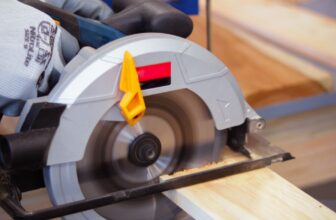
A circular saw travels through the material by hand, usually guided by a marked line, straightedge, or track. This makes it well suited to breaking down plywood, trimming decking, and cutting lumber where it lies. The cordless DEWALT 20V MAX XR model emphasizes that mobility, but final accuracy still depends on setup and control.
A miter saw lowers a hinged blade onto stock held against a fence. That fixed cutting path makes square crosscuts and repeated lengths easier—useful for picture frames, baseboards, shelving, and batches of identical boards. A sliding 12-inch model such as DEWALT’s compound miter saw also handles wider stock and angled or beveled cuts.
| Consideration | Circular saw | Miter saw |
|---|---|---|
| Cut range | Long rip cuts, sheet goods, crosscuts | Crosscuts, miters, bevels |
| Accuracy | Good with a guide; skill matters | Naturally consistent for repeated cuts |
| Capacity | Cut length is nearly unrestricted | Limited by blade and slide travel |
| Portability | Compact and easy to carry | Heavy and awkward to move |
| Space | Stores easily; needs a cutting surface | Needs a stable bench and stock clearance |
| Learning curve | Requires steady tracking and support | Easier alignment, but safe clamping matters |
| Dust | Often spreads chips along the cut | Collection bag or vacuum port helps contain debris |
Common add-ons include straightedges, tracks, and sawhorses for circular saws; miter saws benefit from stands, extension supports, stops, and hold-down clamps.
DEWALT DCS590B: a mobile sheet-goods workhorse
Top choice for portable, high-power jobsite cutting
The 7-1/4-inch DEWALT DCS590B suits projects that move between a garage, yard, and unfinished jobsite. Its handheld format is especially practical for breaking plywood or lumber into manageable pieces before finer assembly.
This is a tool-only model, so it makes the most sense for someone already using compatible 20V MAX batteries—or prepared to add a battery and charger. The brushless motor, electronic brake, and 57° bevel range give it the specifications expected of a capable general-purpose saw.
- Cordless setup starts quickly
- Handles long and oversized stock
- Full-size 7-1/4-inch blade
- Electronic blade brake
- Bevels to 57°
- Straight cuts depend on technique
- Battery and charger sold separately
- Needs stable material support
- Repeated cuts require measuring or jigs
Quick take A strong first saw when portability and broad cutting capacity matter most. Accuracy improves markedly with a straightedge, careful layout, and solid work support.
A circular saw needs a clear blade path and stable support beneath the material. Foam insulation board works well under sheet goods; lumber can rest across sawhorses positioned so the kerf opens rather than pinches.
Keep both hands controlling the saw, wait for full blade speed, and never twist the tool back onto the cut line. Pinched blades can drive the saw backward, so learning how to reduce circular-saw kickback matters as much as choosing the blade. For longer sessions, keep a charged spare battery available.
DEWALT DWS780: workshop precision for repeated cuts
Best for precision cuts and professional woodworking projects
The 12-inch DWS780 is a precision-first choice for trim, cabinetry, framing, and other projects built around repeated crosscuts. Its sliding head accommodates wider boards, while the double-bevel mechanism handles compound trim angles without requiring the workpiece to be flipped as often.
This is best treated as a dedicated workstation saw rather than an all-purpose first purchase. It suits serious hobbyists and frequent remodelers who regularly cut molding, shelving, flooring, or dimensional lumber to matching lengths.
- Clean crosscuts with a suitable blade
- Repeatable lengths and angles
- Sliding action handles wide boards
- Dual bevel simplifies compound trim
- Shadow guide marks blade contact
- Large footprint needs dedicated space
- Long stock requires extra support
- Poor choice for rip cuts
- Corded setup limits mobility somewhat
Quick take The DWS780 earns its space when finish quality, wide crosscut capacity, and repeatability matter regularly. For occasional repairs or mostly straight cuts, its size and capability may be more than necessary.
|
Mobile rough-work pick
DEWALT 20V MAX XR Brushless Circular Saw
|
VS |
Repeat-cut precision pick
DEWALT 12-Inch Sliding Compound Miter Saw
|
|---|---|---|
|
Flexible layout-line cuts anywhere
|
Dimensional lumber, framing, and decking |
Fast repeated crosscuts and angles
|
|
Best for sheet breakdown
|
Full sheets and large furniture panels |
Not a sheet-cutting tool
|
|
Guide needed; slower repetition
|
Trim, molding, and repeated furniture parts |
Cleaner, repeatable finish cuts
|
|
Cordless and easy to carry
|
Rough work and jobsite mobility |
Accurate but cumbersome to move
|
|
Compact; add guides and clamps
|
Setup, support, storage, and power |
Needs stand, space, and outlet
|
| View saw | View saw |
Space and dust may decide it
A miter saw works best as a stable cutting station. It needs bench space, clearance behind the sliding rails, and support on both sides for long boards. The DEWALT 12-Inch Sliding Compound Miter Saw is therefore easier to justify in a workshop or garage than in a cramped storage area.
A circular saw needs less permanent space, but every cut requires a fully supported surface. Sawhorses, a sacrificial worktop, or rigid foam beneath sheet goods can provide safer, more predictable support. The cordless DEWALT 20V MAX XR can also be carried outside, keeping much of the mess out of the shop.
Dust behaves differently, too. Miter saws throw chips backward and around the blade; a dust bag catches only part of them. Circular saws often leave a longer trail beneath the cut, especially outdoors or when trimming sheet goods. A vacuum helps either tool, but hose size, airflow, and port fit matter when choosing a shop vacuum for sawdust collection. Neither setup is dust-free, so cleanup and respiratory protection remain necessary.
Safety rules before every cut
Use a sharp blade rated for the saw’s speed and matched to the material and cut. Support long stock, clamp the workpiece when practical, and ensure offcuts cannot pinch the blade.
Wear safety glasses and hearing protection. Disconnect the plug or remove the battery before blade changes or adjustments. For corded work, follow proper extension-cord sizing for power saws; light-duty household cords may overheat under load.
Route cords behind the cutting path. Seat batteries fully and keep them clear of supports and loose stock. Start with the blade clear of the material, maintain a balanced stance, and keep hands outside the danger zone.
Release the trigger after each cut. Let the blade stop completely before lifting a miter saw or setting down a circular saw.
Let the next project decide
Let the next confirmed project settle the choice. A circular saw is the stronger first purchase for sheet goods, framing, outdoor repairs, and work that moves between locations. A miter saw earns its space when trim, flooring, or batches of identical crosscuts are recurring jobs.
Buying neither can be sensible: rentals, store cutting services, or a hand saw may cover occasional work without creating storage demands. Add either machine to a beginner DIY toolkit only when real projects justify its capabilities.