Kate Donovan
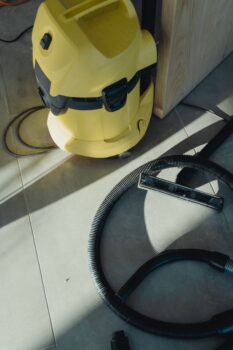
A powerful vacuum is only as effective as its most restrictive connection.
A miter saw roars, the vacuum sounds even louder, yet a pale cloud still settles across the bench. That mismatch usually begins somewhere between the tool and the tank: a narrow dust port, undersized adapter, long corrugated hose, clogged filter, or leaking joint.
What keeps dust controlled is sustained airflow through the complete extraction path. Tank capacity mainly determines how often the vacuum needs emptying, while peak-horsepower figures say little about performance once a tool, hose, and loaded filter add resistance. A well-matched extractor maintains useful flow under those real workshop conditions instead of merely sounding strong at an open inlet.
Five shortlists for different workshop needs


- Airflow (CFM)
Airflow describes how much air the vacuum moves. Higher CFM helps carry chips and airborne dust, but unrestricted ratings do not guarantee strong capture through a narrow tool port.
- Sealed suction or static pressure
Static pressure measures the vacuum’s ability to pull against resistance. It matters when extraction passes through small ports, long hoses, restrictive filters, or partially filled bags.
- Performance under dust load
Fine sanding dust can clog filter media quickly, while a full bag reduces the space available for airflow. Automatic filter cleaning, sensible bag changes, and adequate filter area help preserve performance during longer sessions.
- System resistance
Every narrow adapter, sharp bend, corrugated hose, and loose connection can reduce capture at the tool. A short, smooth hose with well-sealed fittings often performs better than a larger vacuum attached through a complicated adapter chain.
- Tool extraction versus cleanup
Power-tool extraction requires sustained airflow through a restricted port, not merely strong pickup at an open floor nozzle. A compact vacuum suited to everyday cleaning may collect crumbs and debris well yet struggle with continuous fine dust from a sander or saw.
Each extractor was judged against the work it is most likely to perform, rather than ranked by motor figures alone. Practical convenience mattered alongside sustained suction.
Filter grade, cleaning mechanism, hose size, adapters, seals, and bag design were considered together. Automatic cleaning and sensible airflow paths can help delay the suction loss caused by loaded filters.
Capacity was balanced against footprint, wheel design, carrying ease, hose storage, and operating noise. A larger drum suits extended sanding or jobsite cleanup, while a compact, quieter unit is easier to live with in a small shop.
Automatic tool switching, remote controls, filter access, bag changes, and replacement-part availability shaped everyday usability. Controls that reduce unnecessary runtime can also limit noise and filter loading.
Published airflow, pressure, capacity, and noise figures are useful for comparison, but test methods vary; actual performance depends on the tool, hose setup, filter condition, and debris.
Fein Turbo I: Balanced Indoor Tool Extraction
01
Top choice for powerful, quieter workshop dust extraction
The Fein Turbo I pairs a 151 CFM turbine with a relatively restrained 66 dB operating level, making it well suited to hobby workshops where extraction runs frequently. Its auto-start outlet, 13-foot hose, and 19-foot cord support power-tool use without constant switching or repositioning. The 5.8-gallon tank remains manageable indoors, though it is better suited to dust and routine cleanup than prolonged collection of bulky planer chips.
- Quiet 66 dB operation
- Tool-triggered auto start
- Long hose and cord
- HEPA filtration listed
- Modest chip capacity
- Adapters may be required
- Filter choice affects airflow
Quick take A strong middle ground between workshop suction, operating comfort, and portability. Port compatibility should be checked before purchase, especially for tools with proprietary fittings.
The Turbo I is the balanced choice for hobbyists who value frequent, quieter indoor extraction and convenient tool activation. Its suction and reach suit sanders, saws, and general cleanup, but correct adapters and a properly seated, clean filter remain essential. Larger chip-producing tools can fill the compact tank quickly.
Festool CT 15 HEPA: Compact, Tool-Ready Dust Control
Best for premium filtration and automatic tool starting
The CT 15 is a 15-liter mobile extractor aimed at sanding, routing, and other handheld-tool work where fine dust matters more than debris capacity. Its HEPA filtration and automatic tool start make it a natural companion for frequent indoor projects.
The compact canister stores easily between jobs, while onboard space for the included cleaning nozzles keeps the setup tidy. It fits most naturally into a Festool-centered workshop, where hoses and tool connections are designed to work together with minimal fuss.
- HEPA filtration captures fine workshop dust
- Automatic start follows connected tool operation
- Compact body is easy to move and store
- Festool tool integration feels coordinated
- Premium cost for a 15-liter extractor
- Capacity is modest for bulky debris
- Cross-brand tools may require added adapters
- Accessory costs can accumulate
Bosch VAC090AH: Built for Longer, Dustier Sessions
High-capacity option for demanding power-tool dust control
The nine-gallon Bosch VAC090AH is the larger-volume choice for renovation work, repeated power-tool use, and jobs that produce dust faster than a compact extractor can comfortably manage. Its 150 CFM airflow and 97-inch static water lift are suited to maintaining extraction through restrictive tool ports and a gradually loading filter.
This is a jobsite-oriented wet/dry extractor rather than a bench-side convenience vacuum. The extra capacity makes sense for extended sanding, grinding, or cleanup sessions, especially when frequent stops to empty a smaller tank would interrupt the work. In a tight, bench-centered shop, however, its footprint and capacity can be more than the workload requires.
- Nine-gallon collection capacity
- Up to 150 CFM airflow
- 97-inch static water lift
- Automatic filter cleaning
- Tool-activated operation
- Bulky for small workshops
- More capacity than light tasks need
- Less convenient for quick cleanup
ECOMAX Eight-Gallon: An Approachable Woodshop Extractor
Affordable choice with power-tool activation and filter cleaning
The ECOMAX is aimed at hobby workshops needing one machine for sawdust at the tool and general wet/dry cleanup. Its eight-gallon stainless-steel canister offers more debris capacity than compact extractors without moving into a large jobsite format.
The feature list is promising for routine woodworking, but the details deserve checking before purchase. Confirm the supplied filter’s actual class or certification, replacement-filter availability, hose and adapter sizes, and whether the automatic tool-control outlet supports the intended saw or sander.
- Eight-gallon wet/dry capacity
- Listed automatic tool activation
- Semi-automatic filter cleaning
- Anti-static hose included
- HEPA specification needs verification
- Fitting compatibility may require adapters
- Consumable availability is less established
- Tool-control limits need confirmation
CVL30-RC: Remote Switching for Fixed Workshop Setups
Convenient remote operation for garages and workshops
The eight-gallon CVL30-RC is aimed at workshops where the vacuum sits behind a bench, beneath a fixed tool, or otherwise beyond easy reach. Its handheld remote can remove the need to walk over and operate the vacuum switch, though this should not be confused with automatic tool-triggered starting.
Remote operation says little about dust-collection ability. The listed 1000-watt motor and 5.5 peak horsepower do not reveal sustained airflow or static pressure, so hose size, tool-port fit, and extraction specifications still deserve scrutiny. Before committing, confirm remote range, pairing behavior, replacement availability, and whether nearby devices can cause interference.
- Remote operation suits inaccessible placement
- Eight-gallon wet/dry capacity
- HEPA filter and dust bag included
- Wheeled base aids repositioning
- Airflow and static pressure not specified
- Remote range requires confirmation
- Not clearly an automatic tool trigger
- Small review history limits confidence
Keep Suction Strong at the Tool
-
Match the hose to the port
Use the shortest practical hose with a diameter suited to the tool. Avoid reducing diameter earlier than necessary.
-
Remove avoidable restrictions
Limit sharp bends, long adapter stacks, and crushed hose sections; each adds resistance before dust reaches the tank.
-
Seal every connection
Check cuffs, adapters, tank latches, and unused inlets for leaks. A snug friction fit or suitable seal should not wobble loose.
-
Use the correct filter
Fit the filter required for the dust and machine, then inspect it regularly. Fine dust can clog pleats while the tank still appears nearly empty.
-
Empty and clean promptly
Do not wait for obvious suction loss. A cyclone separator can help during heavy planing, routing, or sanding by capturing chips before they load the filter, but it adds space and hose resistance.
A power tool and extractor may exceed a shared circuit’s capacity during startup. Check both ratings, avoid undersized extension cords, and use separate circuits or approved staggered starting when needed.
Extraction reduces airborne debris but never replaces guards, safe cutting technique, eye protection, or suitable respiratory protection.
Make the Vac Part of the System
Start with the main tool and dust: Festool CT 15 suits compact HEPA-focused pairing, Fein Turbo I favors quiet shops, and Bosch VAC090AH handles longer, higher-volume work. ECOMAX is the budget woodworking choice; CVL30-RC fits remote-first setups. Confirm the tool-port diameter and adapter path, then rank noise, capacity, filtration, price, and controls.
Before buying, verify adapters, bags, filters, and replacement availability. For a dependable part of building a capable home tool kit, inspect leaks and clogs, empty the tank, and service filters before suction noticeably falls.